
The Presenting Problem 🪑
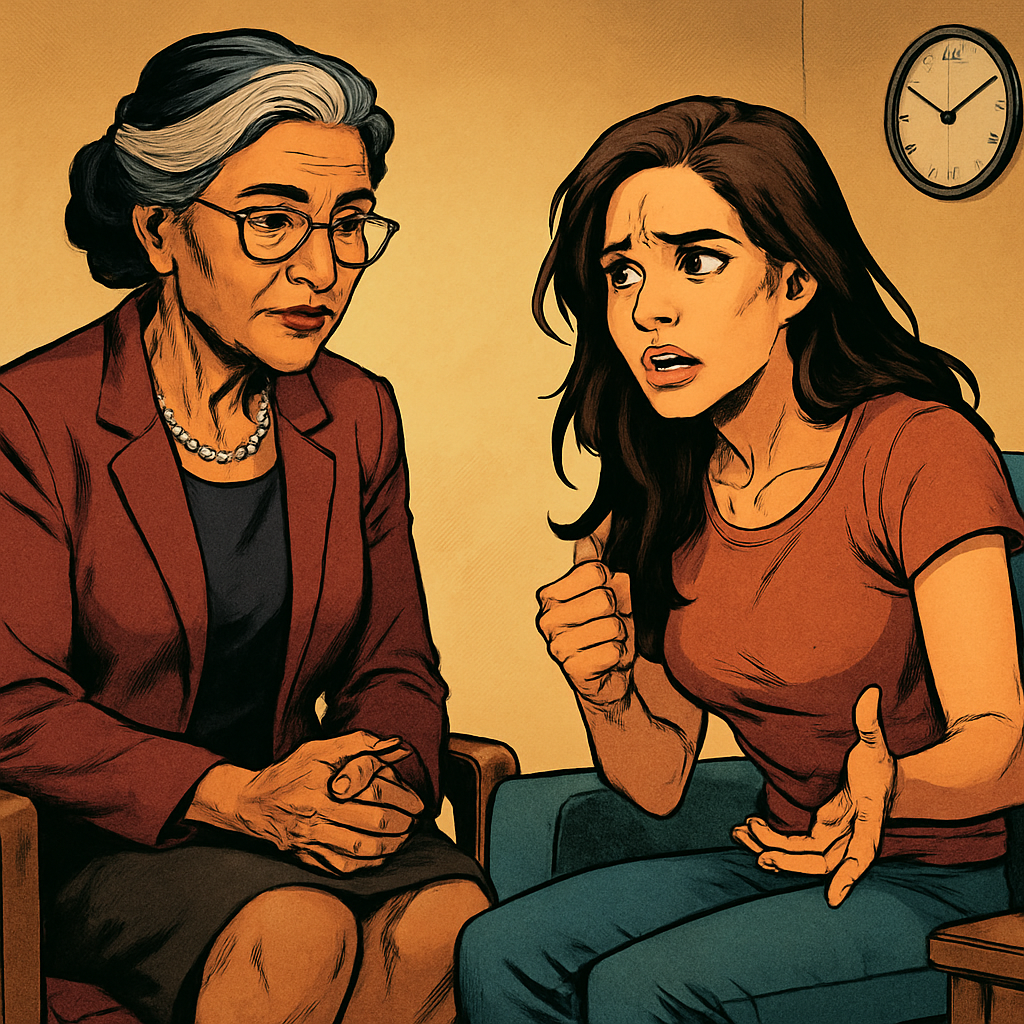
Brooke walked into my office carrying the kind of emotional weight that makes your shoulders curve inward. Her boyfriend had cheated during their long-distance relationship and confessed while experiencing a psychotic break in a psychiatric ward. Now she was trapped in an impossible loop: Which version of him was real? The one who betrayed her, or the one apologizing through a haze of delusions?
She’d failed her board exams while he passed his. He was hospitalized. She was caring for him anyway.
And she wanted to know if she was crazy for still loving him.
But here’s the question you need to ask yourself: When someone you love hurts you while their grip on reality is slipping, are you obligated to put your pain on hold?
The Messy Physics of Betrayal 💔
Most people don’t understand that betrayal activates the same neural pathways as physical injury. Your brain doesn’t distinguish between a broken bone and broken trust—both signal danger, damage, threat to survival.
Brooke’s body was keeping score in ways her mind couldn’t rationalize. Her stomach tightened thinking about the other woman. Her chest felt hollow imagining leaving him. Her hands literally shook when she tried to make a decision.
But here’s where it gets complicated: her emotional framework for this relationship was colliding with incompatible information. The man she loved had betrayed her. Except he’d confessed while psychotic. Which meant maybe he hadn’t betrayed her at all—or maybe he had, and the psychosis just removed his filter.
You can’t logic your way out of that kind of uncertainty. The body doesn’t care about nuance.
What happens to your sense of reality when the person who hurt you might not have been themselves?
The Delusional Confession Paradox 🔀
In our third session, Brooke asked: “If he told me he cheated while he was delusional, does that mean it’s not true? Or does it mean it’s the only true thing he said?”
What she didn’t realize was that an invisible power structure had reorganized their entire relationship. She’d failed her exams; he’d passed his. She was now his caretaker; he was the patient. Her hurt had been automatically shelved as “less important right now.”
When someone’s grip on reality shatters, you lose even the clarity of anger. You can’t rage at someone whose brain is misfiring. You can’t demand answers from someone who might not remember asking the questions.
Brooke’s emotional pattern—her automatic response—was to sacrifice her needs during others’ crises. She’d been running this program since childhood, when her mother’s depression made Brooke the family stabilizer. Now she was doing it again, and her body was screaming at her to stop.
Are you staying in a painful situation because you’ve learned that your needs are only valid when someone else’s are worse?
The Work 🔧
We didn’t try to answer whether he’d actually cheated. That’s not how emotional healing works. Instead, we examined what Brooke’s body was trying to tell her.
Her nausea? Her body signaling a violated need for safety and honesty. Her hollow chest when imagining leaving? A need for connection and continuity. Her shaking hands? Competing survival strategies fighting for dominance.
I asked her to practice emotional granularity—transforming her overwhelming “I don’t know what to feel” into specific, manageable emotions. Was she angry? Scared? Grieving? Guilty? Betrayed? Protective? Yes. All of the above at different moments. And that was okay.
The harder truth: communication after trust breaches requires both people to be present and coherent. Her boyfriend wasn’t coherent yet. Maybe he would be. Maybe he wouldn’t remember. But Brooke’s pain was happening right now, and it needed attention regardless of his mental state.
I also pointed out the pattern she’d been avoiding: she was re-traumatizing herself by staying in a situation where she couldn’t get clear answers. Research is unambiguous on this—prolonged uncertainty is psychologically destabilizing. It keeps your nervous system in constant threat-detection mode.
What Changed 🌱
Brooke didn’t leave him. She didn’t stay with him either, not in the way she had been. She created what I call a “sacred pause”—a boundary that gave her space to feel her own feelings without abandoning him to his crisis.
She told him she needed time. She stopped visiting daily. She started sleeping through the night again.
Most importantly, she stopped asking herself if she was wrong to have feelings. Feelings don’t need permission. They’re information, not character flaws.
In our last session, she said something that stuck with me: “I think I was more afraid of being the kind of person who leaves than I was of staying in something that was hurting me.”
There it was—the invisible structure. The unspoken rule that good partners endure anything. The cultural script that love means self-erasure.
What narrative about “good people” are you using to justify your own suffering?
The Uncomfortable Truth 😔
After twenty years of sitting across from people in Brooke’s situation, I’ve learned this: You cannot heal a relationship wound while the other person is psychologically fragmented. You can wait. You can hope. You can maintain connection. But you cannot get closure from someone who isn’t coherent enough to give it.
We want clean answers. Did he cheat or didn’t he? Should she stay or go? But real life hands us ambiguity wrapped in crisis, tied with someone else’s mental illness.
The only question that matters is: What does your body need to feel safe right now?
For Brooke, it was distance. For someone else, it might be proximity. There’s no universal right answer—only what your deepest self is screaming at you to notice.
Your confusion is information. Listen to it.
— Sophia Rivera, who once tried to logic her way out of heartbreak and can confirm it doesn’t work
- Is romantic partner betrayal a form of traumatic experience … – PubMed
- What Happens to a Relationship with No Trust Over Time?
- The Affairs That Hurt Men and Women Most | Psychology Today
- After a Breach of Trust Don’t Make It Worse | Psychology Today
- [PDF] Mental Health Consequences of Romantic Betrayal
- Trust in relationships: a preliminary investigation of the influence of …
- Betrayal Trauma: Signs and How to Start Healing – Healthline
- 10 Hidden Breaches Of Trust Damaging Your Relationship
- The Psychology of Betrayal: Why It Hurts So Deeply
- Addressing Trust Issues in Romantic Relationships
- What Betrayal Does to the Brain and Body – Dr Kathy Nickerson
- Trust Issues and Consequences in Romantic Relationships – IJIP
- [PDF] Commitment and Betrayal in Intimate Relationships: A Grounded …
- The Importance of Safety and Trust in Romantic Relationships
- Sensitivity to betrayal and new intimate relationship building in …