
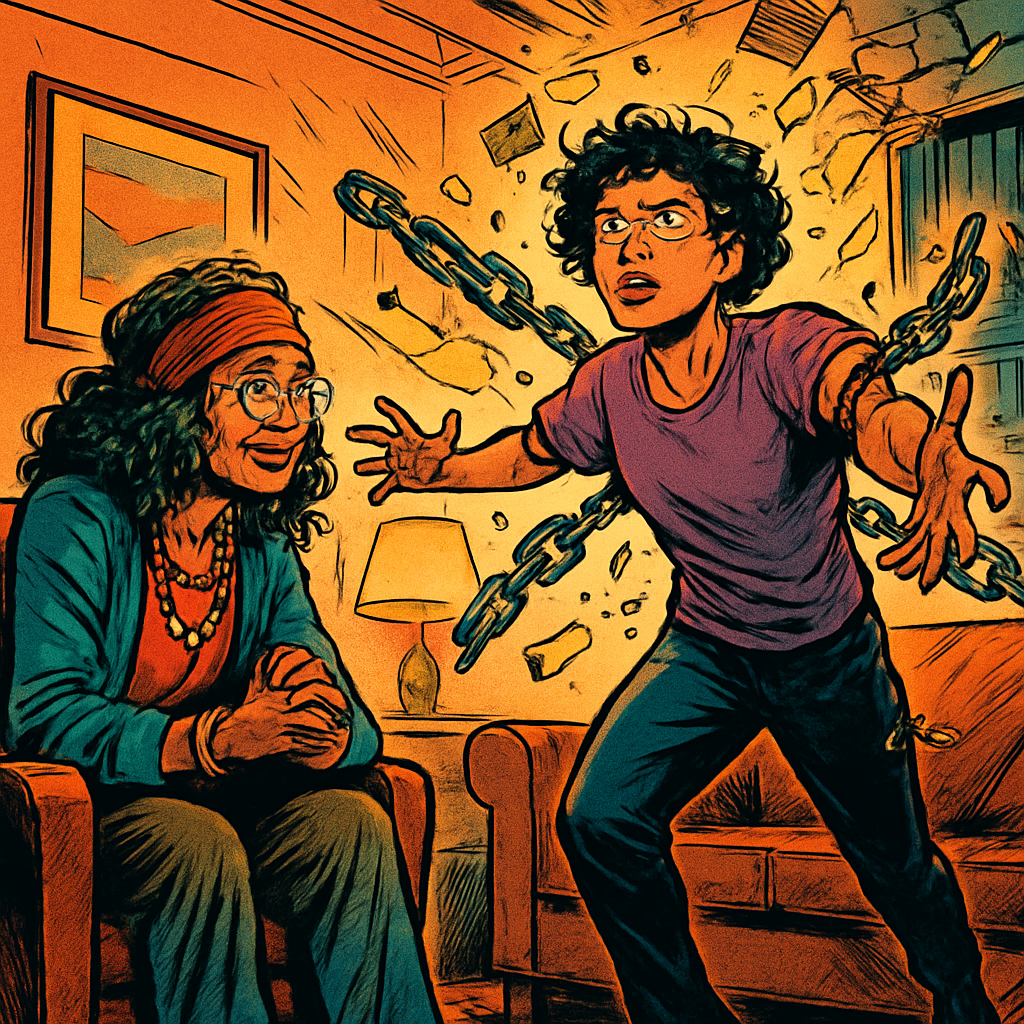
I met Zephyrine on a Tuesday afternoon in my Manchester office—the kind of grey November day where the light barely makes it through the windows. They sat with their hands folded neatly in their lap, spine straight, eyes alert but distant. The posture of someone who’s learned that taking up space is risky.
Within ten minutes of conversation, I recognized what I’d seen countless times before: a person caught between two equally painful stories about themselves. One whispered, “I’m protecting myself wisely.” The other insisted, “I’m destined to be alone.”
What struck me most wasn’t the trauma they’d endured—betrayal, assault, homelessness. It was how meticulously they’d organized their life around the belief that their pain was evidence of fundamental unsuitability for closeness. They’d constructed something that looked like healthy boundaries but felt, from the inside, like a cage they’d agreed to live in. 🔒
The irony? The very capacity that saves us in crisis—the ability to retreat, to prioritize our own safety—becomes our prison when we mistake it for wisdom about who we are.
The Architecture of Self-Protection 🏗️
When I asked Zephyrine to describe what happens when they consider opening up to someone, they gave me something clinical: “I pause before reacting. I think about whether it’s safe. I prioritize self-care.”
These weren’t bad things. But the way they spoke about them—like reading from a manual—told me something else was happening underneath.
I asked them to slow down and walk me through a specific moment. A colleague had invited them to lunch. Seemed ordinary enough.
What emerged was a cascade of what I think of as emotional bytes—tiny units of sensation, narrative, and need that fire through our nervous system in moments of potential connection. First came the physical sensation: tightness in the chest, a slight retreat of breath. Then the charge: anxiety followed by something closer to dread. And then the story, quick as reflex: If I go, I’ll say something wrong. They’ll see I’m broken. It’s safer not to go.
Zephyrine wasn’t lying about any of this. The body sensations were real. The anxiety was real. But what they’d done—what trauma does to all of us—was organize these individual signals into a rigid emotional frame: a fixed interpretive lens through which every invitation, every potential connection, gets filtered as threat.
The pause they’d developed wasn’t just emotional regulation. It had become an automatic script, a behavioral pattern that felt like wisdom but functioned as avoidance. And here’s what matters: they couldn’t see the difference anymore.
The Hidden Cost of Solitude 💭
From what I’ve noticed sitting with people who’ve survived real harm, there’s a peculiar inversion that happens. The strategies that kept us alive—hypervigilance, emotional distance, the ability to disappear into ourselves—these become so normalized that we forget they were emergency protocols, not personality traits.
We start to believe that our trauma has revealed something true about us, rather than something true about what we endured.
Zephyrine had begun asking me a question I hear regularly: “Is my fear of intimacy just how I’m wired, or is it something my past created?”
The truth is far more interesting than either option allows. Their fear wasn’t a fundamental personality trait, but it wasn’t simply a created wound either. What had happened was something like calcification: the emotional bytes had organized themselves into such a rigid pattern that flexibility itself felt like danger.
What surprised Zephyrine when we began to explore this wasn’t the trauma history. They already knew what had happened. What surprised them was discovering how much energy they were spending managing invisible structures—the unspoken rules they’d internalized about who was safe, what vulnerability meant, whether they deserved to be known.
They were exhausted not from the memories but from constantly enforcing boundaries against connection.
I remember them saying, quite suddenly, “I thought I was being strong, but I think I’m just being afraid and calling it strength.” That’s the moment real work becomes possible. ✨
When Pausing Becomes Paralysis ⏸️
Here’s what people don’t realize: the capacity to pause before reacting is genuinely valuable. It’s a form of emotional granularity—the ability to distinguish between impulse and choice, between what we feel and what we do with that feeling. That’s not weakness. That’s intelligence.
But like any survival mechanism, it needs updating.
The problem with Zephyrine’s pause was that it had become absolutized. Every potential connection went through the same filter: Is this safe? Can I trust this? What if I get hurt? And because vulnerability inherently contains risk, the answer was always the same.
We spent several sessions mapping what I think of as the invisible structures organizing their relational life. The unspoken rules they’d absorbed:
- People who’ve been hurt are fundamentally different from others
- Real connection requires perfect safety (an impossibility)
- Their trauma made them unreliable or damaged goods
- Preferring solitude was strength rather than exhaustion
These weren’t consciously chosen beliefs. They were encoded into their emotional bytes through years of experience that taught them connection was dangerous.
What surprised me was discovering how much of their isolation served a hidden purpose. Yes, it protected them from rejection. But it also protected a particular story about who they were. As long as they stayed alone, they never had to risk discovering that the story might be wrong.
The Question Beneath the Question 🤔
Toward the middle of our work together, I asked Zephyrine something sideways: “What would it feel like if you discovered you weren’t broken at all? What would that require of you?”
The question seemed to genuinely unsettle them.
What emerged over several sessions was the real architecture of their fear. It wasn’t actually fear of intimacy, though it wore that disguise. It was fear of something more fundamental: the fear that if they stopped protecting themselves so vigilantly, they’d discover their own needs. That vulnerability would demand things of them. That being known meant being responsible—not just to others, but to themselves.
This is where I think the real work of emotional intelligence begins. It’s not about managing your emotions better or communicating more effectively, though those things matter. It’s about recognizing the systems creating those emotions in the first place—understanding not just that you feel unsafe, but why your particular emotional architecture makes safety feel impossible.
Zephyrine’s preference for solitude wasn’t a simple symptom. It was a solution, albeit one that had outlived its usefulness. In the crisis of their past, it made complete sense. But in the present, where actual safety existed, the same patterns created a different kind of crisis: the slow erosion of connection, the corrosive doubt about whether they were capable of being known.
What Changed 🌱
With Zephyrine, what shifted was small but significant. We stopped talking about whether they were “too traumatized for relationships” and started asking: “What would it feel like to trust that you could survive disappointment? Not that disappointment won’t happen—it will. But that you could survive it and still choose connection anyway?”
That’s different from positivity or forced vulnerability. That’s actually acknowledging that the risk is real, the fear is legitimate, and the choice to connect despite that is an act of genuine courage.
Over time, Zephyrine didn’t become more outgoing or less careful. They became more flexible. They started to experience what I think of as emotional granularity—the ability to distinguish between different kinds of safety, different levels of vulnerability, different people and contexts rather than applying the same rigid script to everything.
They could feel fear and still say yes to coffee. They could worry about being known and still speak honestly. The pause became less like a wall and more like an actual choice. 💚
The Integration 🔄
Not because their trauma was resolved. Trauma doesn’t resolve—it integrates. But because they began to see their survival strategies as exactly that: strategies, not identity. And the difference between those two things is everything.
Over two decades of listening to people’s stories, I’ve observed something that contradicts most self-help wisdom: the people most committed to their own growth are often the ones most vulnerable to becoming trapped by their own self-protection. They develop such sophisticated understandings of their trauma, such articulate language for their pain, that they begin to mistake explanation for resolution.
They become very skilled at the pause, the reflection, the careful boundary—and then one day they realize they’ve built a life where the primary relationship is with their own caution.
Women seem particularly susceptible to this trap. Perhaps because we’re often socialized to manage our emotions carefully anyway, adding trauma on top of that creates a double bind: be strong enough to survive, but not so strong that you seem difficult. Protect yourself, but not so much that you seem cold. Be vulnerable, but only in safe ways. It’s exhausting in a way that doesn’t look like exhaustion from the outside.
The Truth About Solitude 💎
The truth is this: solitude is only wisdom when it’s chosen, not when it’s enforced. And the difference between the two is usually invisible until someone helps you look. – Monica Dean.
- The Connection Between Emotional Intelligence and Successful …
- [PDF] Emotional Intelligence and College-Aged Couples’ Relationship …
- The role of Emotional Intelligence in relationships, according to …
- The Relationship between Emotional Intelligence and Marital … – NIH
- Emotional Intelligence In Relationships: How To Develop Your EQ
- [PDF] Emotional Intelligence in Relationships
- The vital connection between emotional intelligence and well-being