
🌪️ When Friendships Feel Like Quicksand
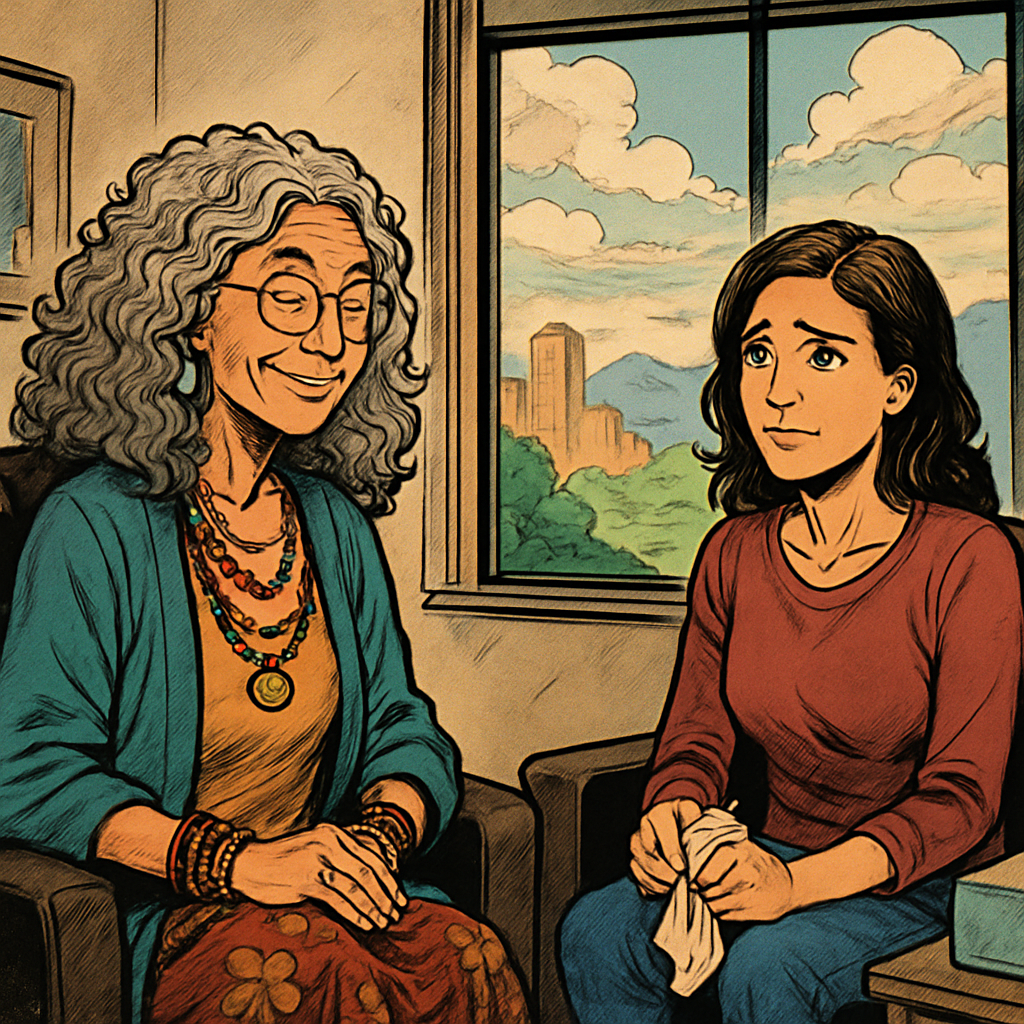
I remember Rachel vividly—a bright 28-year-old with kind eyes that couldn’t quite hide her exhaustion when she first walked into my consulting room. She sank into the armchair with a mix of relief and trepidation, as if finally acknowledging a problem she’d been carrying for too long.
“I don’t even know if I should be here,” she began, twisting a tissue in her hands. “It’s just friendship drama, isn’t it? Shouldn’t I have figured this out by now?”
Over the next hour, Rachel described a friendship triangle that was slowly draining her vitality. Two close friends from university had become central to her life. While one was supportive and straightforward, the other had grown increasingly possessive, erupting with hurt feelings whenever Rachel spent time elsewhere.
From two decades of counseling, I’ve observed that women often navigate friendship conflicts by attempting to preserve harmony at significant personal cost. Rachel was a textbook example—constantly reassuring, carefully managing emotions, and feeling personally responsible for her friend’s happiness while her own needs disappeared.
“I spend half my time explaining myself and the other half feeling guilty about not making her happy enough,” Rachel confessed. “Sometimes I wonder if there’s something wrong with me that I can’t make this work.”
💔 The Invisible Cost of Being the “Good Friend”
Rachel’s situation reminded me of another client—Samantha—who’d spent three years emotionally supporting a friend through divorce, only to find herself completely depleted when facing her own crisis. When Samantha finally asked for support, her friend reacted with surprise and resentment.
“I realized I’d trained her to see me only as a support beam in her life, never as someone with needs of my own,” Samantha had told me.
When I shared this story with Rachel, something clicked. “That’s it exactly. I’ve somehow become responsible for her emotions while she takes no responsibility for mine. But how did we get here?”
What Rachel was experiencing was an emotional imbalance. Her friend had effectively outsourced the management of her insecurity to Rachel, who felt too responsible to decline the role. This wasn’t actually about friendship—it was about emotional regulation.
🚧 The Boundaries We Feel Guilty About Needing
“I keep thinking that if I just find the right words, she’ll understand and stop feeling threatened,” Rachel explained in our second session.
“That’s assuming her reactions are about understanding, not about emotional need,” I replied. “Think of it like this: when someone’s drowning, they’ll grab onto anything that floats—even if they pull the rescuer under in the process.”
This perspective shifted something for Rachel. She wasn’t failing at explaining herself clearly—she was being asked to fulfill an emotional need that no friend could reasonably satisfy.
What I’ve noticed: The people who most need boundaries are often the ones most likely to make us feel guilty for having them. This creates a dynamic where the healthier your boundaries become, the more resistance you initially face—making many people retreat from necessary boundaries just as they’re beginning to work. 😔
🛠️ Building Emotional Granularity
Over several sessions, Rachel developed what I think of as emotional granularity—the ability to distinguish between feeling responsible for someone’s emotions and actually being responsible for them.
We worked on scripts she could use when faced with emotional demands:
- “I care about you, but I’m not responsible for managing your feelings about my other friendships.”
- “I hear you’re feeling left out, and that must be painful. That doesn’t mean I’ve done something wrong.”
Gradually, Rachel began holding her ground. Her friend’s reactions were initially more intense—what therapists call an “extinction burst” when previously rewarded behavior no longer works. But Rachel maintained her new boundaries with compassion, neither attacking nor reverting to people-pleasing.
🌅 The Clearing That Follows the Storm
When Rachel came for our final session, something had transformed. She sat taller, spoke more confidently.
“We had a massive row,” she said, but she was smiling. “I told her I couldn’t keep walking on eggshells, and that while I valued our friendship, I wouldn’t let her control my other relationships. She cried, I cried. It was awful. But then something amazing happened—we actually talked. Really talked.”
The friendship wasn’t magically fixed, but it had finally become honest. Her friend agreed to work on her jealousy issues, and Rachel committed to being more direct instead of silently accommodating harmful behavior.
As we wrapped up, Rachel reflected: “I always thought good friends never upset each other. Now I realize good friends trust each other enough to be truthful, even when it’s uncomfortable.” ✨
🎯 The Wisdom in Authentic Connection
Last week, I spotted Rachel with two women at a pub. They were laughing together, comfortable in a way that suggested a new equilibrium had been found. When Rachel noticed me, she simply smiled and gave me a little nod—the subtle acknowledgment between people who’ve done good work together.
The kindest friend isn’t the one who never upsets you, but the one who respects you enough to be truthful. 💝
—Monica Dean
- Adolescent Perceptions of Conflict in Interdependent and …
- The Association between Attachment and Conflict Resolution during …
- [PDF] The Association between Attachment and Conflict Resolution during …
- Friendship as a Context for Building Social Skills – PubMed Central
- [PDF] Affect During Conflicts Between Adolescents and Their Best Friends …
- Digital stress and friendship conflict in adolescence: the role of …
- The science of why friendships keep us healthy
- The Role of Personal and Friendship Characteristics on Conflict …