
The Golden Handcuffs We Kiss Goodnight 💰
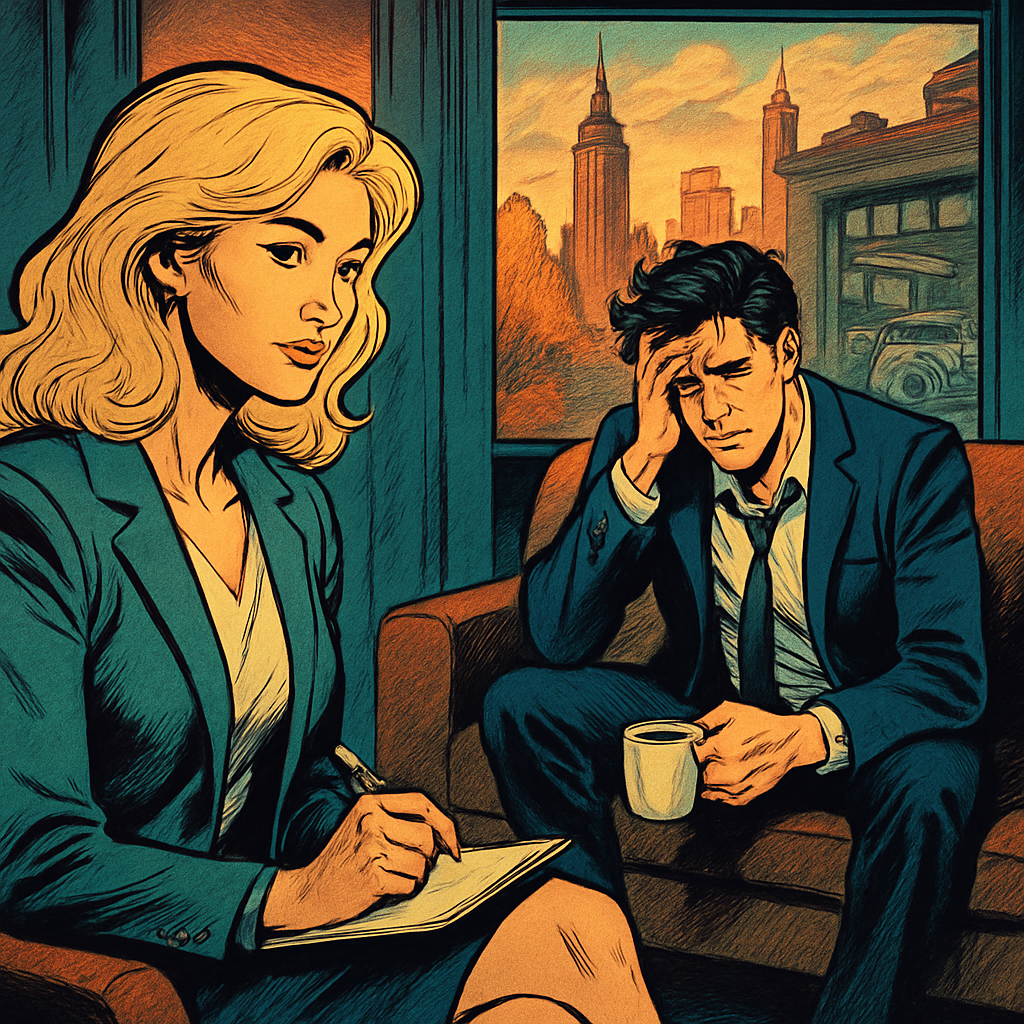
Manhattan in autumn. The kind of crisp Tuesday afternoon where ambitious New Yorkers are either making deals or making therapy appointments to discuss why those deals don’t fill the void. Kai walked into my office clutching a coffee like it might save him from what he was about to say. Designer suit, expensive watch, shadows under his eyes that no amount of Kiehl’s could conceal. I’d seen this look a thousand times—success on the outside, screaming on the inside.
“I’m supposed to be happy,” he said, collapsing onto my couch. “I have the job everyone wants. The fiancée everyone envies. And I’m drowning.” 😔
What followed was the confession I’ve heard variations of for decades: Kai worked in a prestigious position that paid exceptionally well but left him emotionally bankrupt. The twist? A job offer had arrived—his dream work, really—restoring vintage cars. The catch? A 40% pay cut and the disapproval of his future father-in-law. Who, as life’s little jokes would have it, was also his current boss.
Here’s what we all know but pretend not to: we routinely sacrifice our authentic desires at the altar of financial security. The emotional tension we collect from these daily compromises accumulates into what I watched happening with Kai—a sense of living someone else’s life.
“Every morning I wake up and put on this costume,” he told me by our third session. “The suit, the smile, the spreadsheets. Meanwhile, I’m scrolling through car restoration videos during conference calls.” 🚗
When Your Emotional GPS Recalculates 🧭
What people like Kai are really struggling with isn’t just a job choice. It’s an identity earthquake. When your emotional programming around success, worth, and love has been tied to specific outputs (money, status, approval), contemplating change triggers an internal alarm system that feels like imminent death rather than potential rebirth.
“I keep telling myself I’ll be happier later,” Kai admitted in our fourth session. “After the next promotion. After we’re married. After we have kids.”
“And when exactly is this magical ‘after’ scheduled to arrive?” I asked.
His silence was deafening. 😶
We’ve all constructed these elaborate postponement architectures. The emotional script that promises fulfillment is just around the corner if we just keep sacrificing today. The young financial professional delaying real relationships for partnership. The lawyer postponing children for partner track. The consultant missing her own life while optimizing everyone else’s.
Meanwhile, time—that non-renewable resource—keeps evaporating. ⏰
The Price Tag on Your Soul Has Too Many Zeros 💸
Over several weeks, Kai began to recognize that his needs hierarchy had become dangerously imbalanced. His identity and psychological needs for autonomy and authentic expression were being sacrificed for relational approval and external validation.
Together, we worked on developing what I call your personal truth detector—those questions that cut through the noise of “should” and connect you to what you actually want:
- If money were removed from the equation entirely, which path would you choose without hesitation? 🤔
- Whose voice are you hearing when you think about the “responsible” choice?
- What would you attempt if you knew you couldn’t fail?
- If you were diagnosed with a serious illness tomorrow, would this decision change?
- What will you regret more at 80: taking a financial risk or never trying your passion? ⚡
Kai’s answers revealed what he already knew but couldn’t admit. His happiness wasn’t negotiable currency. His passion wasn’t a luxury item to be purchased once everything else was secured.
“My father-in-law called me a facilities person yesterday,” Kai told me during one session. “Like I just manage buildings. But when I think about restoring cars, I see myself creating something that outlasts me.”
Welcome to Consciousness 🌟
By our final sessions, Kai had negotiated a three-month trial with the restoration company. He’d created a financial buffer. He’d had honest conversations with his fiancée about values and expectations. Was it perfect? No. Was there risk? Absolutely.
But what fascinated me most was watching the invisible become visible. As Kai began questioning his emotional frames around success, he started noticing them everywhere—in casual conversations, in advertising, in family dynamics. The scripts weren’t just his; they were embedded in the culture he inhabited.
“I feel like I’m seeing the Matrix code now,” he laughed during our final session. 😄
“Welcome to consciousness,” I replied. “It’s messier here, but the view is better.”
— Lola Adams, reminding you that the salary that buys your freedom today might be financing your cage tomorrow 🔗
- Young workers prioritize money alongside meaning and happiness
- For Gen Z, Happiness Is Greater Than Financial Security – ASA.org
- Generation Z’s Challenges to Financial Independence: Adolescents …
- [PDF] Financial Happiness of Young Professionals – ijrpr
- From Security to Freedom— The Meaning of Financial Well-being …
- Young Americans are struggling to gain economic ground. Building …
- A Systematic Review of Factors That Influence Youths Career …
- A generation adrift: Why young people are less happy and what we …