
When Your Name Goes Missing 👤
A story about Bryson, learning to navigate the invisible organizational systems that shape belonging
The Moment Something Felt Off 🚨
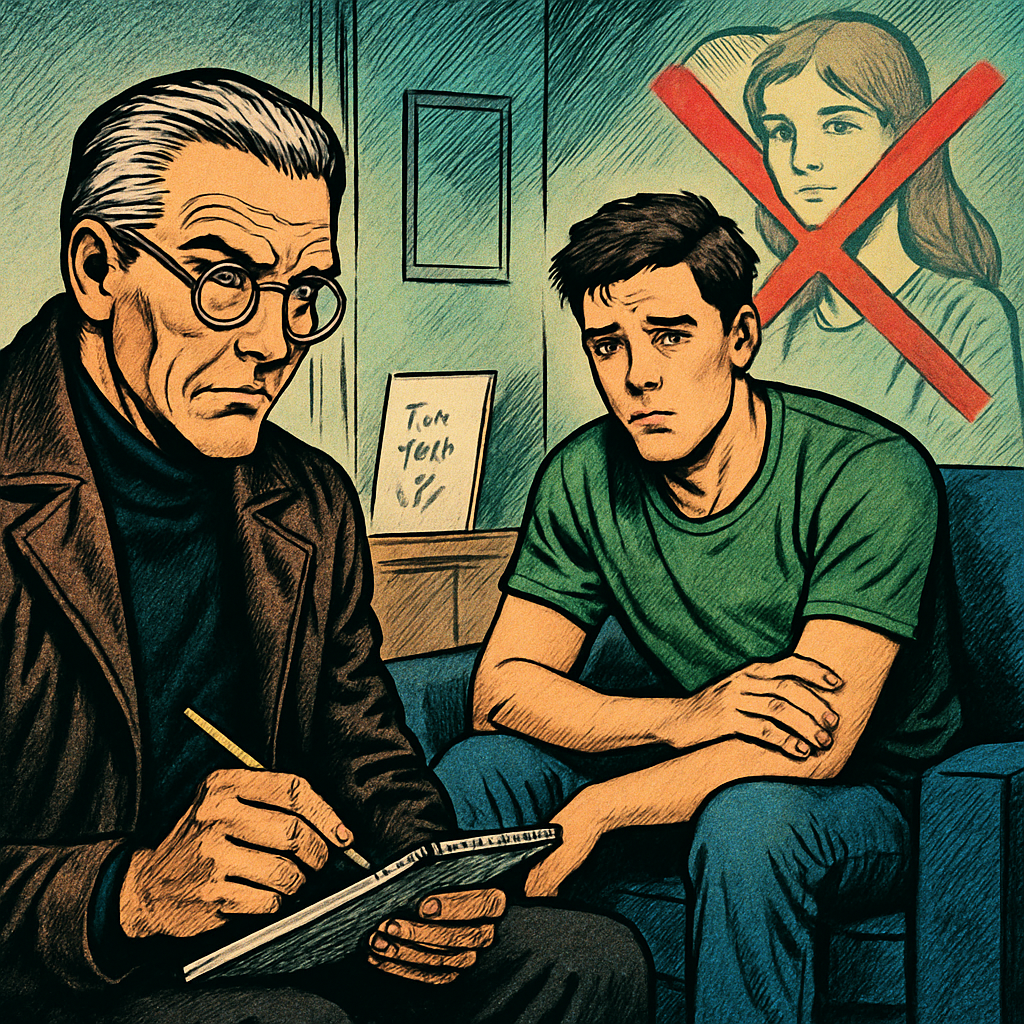
Bryson walked into my office on a Tuesday afternoon, and within five minutes, I could sense something was bothering him—even though he hadn’t fully explained it yet. His body was telling the story: shoulders tight, jaw clenched, the kind of tension that happens when different parts of you are in conflict.
He’d been in a relationship for four years. And there was a pattern that kept repeating.
“She keeps leaving my name off cards,” he began.
That’s when I realized this wasn’t really about greeting cards at all.
The Real Problem Beneath the Surface 📍
Bryson described the scenario carefully—maybe too carefully. He’d buy cards and gifts with his girlfriend for her family members. He’d contribute money, ideas, sometimes pay for half the gift himself. Then she’d sign the card with just her name. Not “from us.” Not “from both of us.” Just hers.
And every time he mentioned it bothered him, his girlfriend would shut it down:
“It’s just a card, Bryson. You’re overreacting. Why are you trying to guilt-trip me?”
Rather than treating his concern as legitimate, she was telling him his feelings were the problem.
That’s not solving conflict. That’s suppressing it.
What’s Actually Happening Here? 🔍
Here’s what most people miss: This isn’t about greeting cards.
Cards are just the visible place where invisible patterns show up. When your partner systematically leaves your name off something you both contributed to, it reveals something deeper about the relationship’s unspoken rules:
- Who belongs to whom
- Whose identity gets claimed publicly
- Which relationships are “ours” versus “hers”
When I helped Bryson look at this from a systems perspective, we identified what was actually operating:
In Bryson’s internal world:
- The part that needs to belong and feel like part of a team
- The part that was learning, through repetition, not to expect acknowledgment
- The part being told he’s “overreacting,” which was starting to make him doubt himself
In his girlfriend’s internal world:
- The part fiercely protecting her family identity as separate and hers alone
- The part threatened by “we” language—by truly becoming a team
- The part dismissing his concerns to avoid having to negotiate
In the relationship itself:
- Rule: Her family relationships remain under her sole authority
- Rule: His contributions are accepted, but his presence isn’t claimed
- Rule: Any objection to this is treated as his emotional problem
The Painful Truth ⚖️
I leveled with Bryson in that first session:
“Your girlfriend isn’t forgetting to put your name on cards. She’s making a choice about how she wants to present herself to her family—one where you’re a contributor but not a co-author. And when you tell her this bothers you, she’s choosing to treat your perception as the problem rather than as information about what you actually need.
Those are two separate decisions happening within a relationship that isn’t set up to give you what you need.”
He blinked. Then nodded slowly.
Because deep down, he already knew.
What Small Erasures Actually Mean 💔
The truth about small erasures is that they’re never small. They’re evidence of the relationship’s actual rules—whether anyone consciously chose them or not.
Bryson had been so focused on individual incidents that he’d missed the bigger picture: This wasn’t one mistake. This was a pattern.
- Cards for her mom—she signed alone
- A gift for her sister—she signed alone
- A Christmas card to her cousin—alone again
Each repeated exclusion was sending the same message to Bryson’s internal system: You are not claimed here.
Meanwhile, his girlfriend was actively preventing any conversation that might change this pattern. She was shutting down his attempts to discuss it by treating his pain as proof that something was wrong with him—not with the system.
What His Pain Was Actually Telling Him 🎯
I helped Bryson understand something crucial:
His pain wasn’t a character flaw. It was diagnostic information.
It was telling him that:
- His need to belong and be integrated was legitimate
- The relationship’s unspoken rules were making that impossible
- The system wouldn’t acknowledge its own rules long enough to change them
By the end of our work, Bryson could see three things clearly:
- What he actually needed: To feel like part of a team, genuinely integrated into his partner’s important relationships
- What the system was actually offering: Contribution without visibility, effort without belonging
- The incompatibility: These two things couldn’t exist in the same relationship
The Real Choice 🚪
Bryson ultimately faced a decision that didn’t require his girlfriend’s permission:
Would he continue shrinking himself to fit within a system not designed to contain him? Or would he honor what his internal system was accurately perceiving?
Sometimes hurt isn’t about being too sensitive. Sometimes hurt is your system’s accurate read that you’re not actually on the same team.
And sometimes the truth hurt is trying to communicate is this:
You are not on the same team. Not because you’re defective. But because this relationship was never organized to include you in the first place.
Your greatest strength isn’t in fighting to be seen by a system not designed to see you. It’s in learning to recognize which connections can actually hold you. 💚