
🤥 The Anatomy of a Lie That Wasn’t Really About Lying
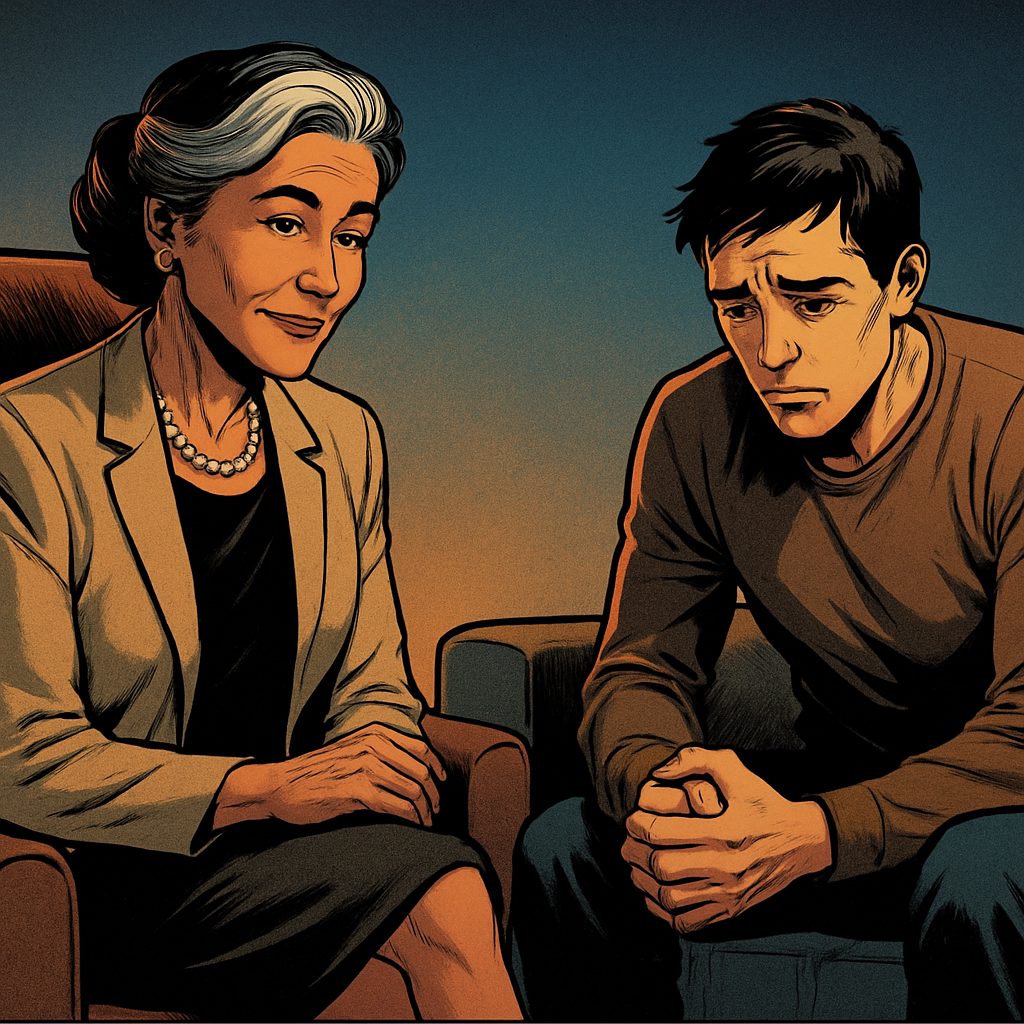
Bryson sat across from me looking like someone had just told him his life savings were in cryptocurrency that had tanked overnight. His girlfriend had caught him in a lie about where he’d been, and now she wanted “immediate action” to fix things. He kept asking me what he should do, like I had some magic checklist that would un-ring the bell.
But here’s what I’ve learned after two decades of sitting in this chair: when someone lies to their partner and gets caught, the lie itself is rarely the actual problem. It’s just the moment when all the invisible structures holding the relationship together suddenly become very, very visible.
When we unpacked what had actually happened, something more interesting emerged. The lie—about being at his friend’s place when he was actually somewhere else entirely—had activated something in his girlfriend that went way beyond simple anger at being deceived.
It had triggered what I think of as an emotional byte cascade: a whole cluster of physical sensations (that gut-punch feeling), emotional charge (panic mixed with rage), unmet needs (for security and transparency), and a mini-story that went something like “If he lies about this, what else is he hiding?”
These emotional bytes weren’t new. They’d been encoded from previous experiences—maybe a parent who was unreliable, maybe a past partner who cheated, maybe just the accumulated weight of living in a world where trust feels like a limited resource. Bryson’s single lie had activated an entire predictive model in her brain that screamed: “Danger. Protect yourself. Demand proof.”
What Bryson didn’t understand yet was that his girlfriend wasn’t actually asking for “immediate action.” She was asking for evidence that her emotional bytes were wrong—that her prediction of betrayal wouldn’t come true.
⚔️ The You-Talk Trap: How Everything Got Worse
Their initial fight had gone about as well as you’d expect. She’d come at him with variations of “You lied, you broke my trust, you’re making me feel crazy.” He’d responded with “You’re overreacting, you never believe me anyway, you’re being paranoid.”
Classic you-talk. Research shows this accusatory ping-pong pattern doesn’t just fail to resolve conflicts—it actually predicts increases in relational aggression over time. Each “you” statement is like adding another brick to an invisible wall between two people.
What fascinated me about Bryson’s case was how his conflict style mirrored what he’d learned growing up. His parents had been masters of avoidance and accusation—problems either got swept under the rug or turned into circular arguments where everyone blamed everyone else and nothing got resolved. He’d imported that entire emotional script into his relationship without realizing it.
When I asked him why he’d lied in the first place, he got quiet. “I just didn’t want to deal with the questions,” he finally said. “It felt easier to say I was at Mike’s than to explain where I actually was and why.”
There it was. Not malice. Not some calculated deception. Just avoidance—the same pattern he’d been running since he was fifteen and learned that honesty often led to lectures or conflict. His emotional frame had taught him that transparency equals confrontation, so his automatic script was to dodge and deflect.
The problem? His girlfriend had a completely different frame. For her, transparency equaled safety. When he withheld information, her system interpreted it as a threat.
🚨 When Urgency Reveals What’s Really at Stake
The “take action right now” ultimatum had Bryson most panicked. But when we examined it through the lens of needs hierarchy, it made perfect sense. His girlfriend wasn’t being unreasonable or demanding. She was experiencing a collapse in her emotional safety needs—that foundational layer that everything else rests on.
Her attachment system had gone into high alert. Research on attachment anxiety shows that when people feel their connection is threatened, they amplify their bids for reassurance. It’s not manipulation; it’s biology. Her brain was doing exactly what it evolved to do when faced with potential abandonment: escalate until she got a response that proved the threat wasn’t real.
What made this dynamic even more complex was how bidirectional it all was. She felt hurt and victimized by his lie. He felt attacked and victimized by her anger. Both were experiencing their own emotional bytes of being wronged, which is exactly how conflicts escalate from “we need to talk” to “maybe this whole relationship is a mistake” in about fifteen minutes.
Bryson’s depressive mood wasn’t helping either. Research shows that when we’re already in a low emotional state, our communication skills tank. We misread cues, get defensive faster, and struggle to access the mental resources needed for constructive conflict resolution. He was trying to navigate this crisis while running on empty.
💡 The Conversations That Actually Moved the Needle
Over several sessions, we worked on something that sounds simple but feels nearly impossible when you’re in the middle of a relationship crisis: developing emotional granularity. Instead of experiencing one massive bubble of “oh god everything is falling apart,” Bryson learned to identify the different components of what he was feeling.
There was guilt about the lie itself. Shame about being caught. Fear of losing the relationship. Frustration at feeling controlled by her demands. Sadness that she didn’t seem to trust him even before this happened. Once we could name these distinct emotional bytes, they became less overwhelming. A bubble of undifferentiated panic became fizz—still present, still requiring attention, but manageable.
We also worked on his meta-emotional intelligence—understanding not just what he felt, but what system was creating those feelings. His avoidance wasn’t a character flaw; it was a protective pattern that had made sense in his family of origin but was now sabotaging his relationship. His girlfriend’s urgency wasn’t her being “crazy”; it was her attachment system doing its job.
The breakthrough came when Bryson stopped trying to defend against her emotional reality and started getting curious about it. Instead of “You’re overreacting,” he learned to say “I’m realizing my lie activated something bigger than this one incident. Help me understand what you’re feeling.” Instead of promises to “never do it again,” he offered transparency about the pattern itself: “I learned to avoid conflict by hiding things, and I’m seeing how that hurts us. I want to change that, but I need to understand what you need to feel safe while I’m learning.”
Was it a magic fix? No. Did his girlfriend immediately forgive him and declare all was well? Absolutely not. But something shifted. The conflict moved from a blame spiral to a shared problem they could work on together.
🔍 What Was Really Hiding Under the Lie
As we kept digging, more invisible structures emerged. Bryson had been spending time with old gaming buddies that his girlfriend found “immature”—not doing anything wrong, exactly, but also not wanting to hear her opinions about his social choices. The lie was a shortcut around a larger conversation about autonomy, influence, and whose opinions matter in a relationship.
This is where the real work lives. Not in the surface-level “I lied, I’m sorry, I’ll never do it again” script, but in the deeper questions: What needs were you trying to meet by avoiding the truth? What invisible rules have we created about what’s acceptable to share and what’s not? How do we build a relationship where honesty doesn’t feel like handing someone ammunition?
His girlfriend had her own work to do, though she wasn’t my client. Her urgent demands for reassurance, while understandable given her attachment style, were also creating a dynamic where Bryson felt like he was constantly on trial. Both of them were running scripts written years before they’d even met.
The social support piece mattered too. When I asked Bryson who he talked to about relationship stuff, he shrugged. “Nobody, really. Guys don’t really do that.” So he’d been trying to navigate this crisis without any external perspective, letting his own emotional bytes echo in a chamber with no competing input. We worked on building a small circle of people he could process with—not to complain about his girlfriend, but to reality-test his perceptions and get perspective on his patterns.
🔄 The Long Game of Rebuilding What You’ve Broken
Six months later, Bryson reported that things were “better, but different.” They’d had to reconstruct their entire communication system from scratch. His girlfriend still had moments of heightened anxiety when he was vague about his whereabouts, but instead of activating his old avoidance script, he’d learned to meet that with transparency and patience. She was working on giving him space to be imperfect without catastrophizing every mistake.
They’d also had some real conversations about what they each needed to feel autonomous and connected—needs that sometimes pulled in opposite directions but didn’t have to be mutually exclusive. Bryson realized he’d been operating under an invisible rule that “being in a relationship means constantly reporting your location and seeking approval for your choices.” His girlfriend realized she’d been operating under an invisible rule that “if someone really loves you, they’ll never make you feel uncertain.”
Both rules were bullshit, of course. But you can’t challenge invisible structures until you first make them visible.
The work wasn’t about turning Bryson into someone who never lied or made mistakes. It was about helping him understand the emotional architecture underneath his choices—the needs, the fears, the patterns imported from his past. It was about teaching him that constructive conflict isn’t about winning or avoiding; it’s about creating enough safety that both people can be honest about what they’re experiencing without it turning into a threat.
Did they stay together? I don’t know. Bryson stopped coming to therapy once things stabilized, which is how it goes sometimes. But I think about his case whenever I hear someone ask for a quick fix to a trust issue.
Because the truth is, broken trust isn’t really about the lie. It’s about all the invisible structures, unmet needs, and automated scripts that made the lie feel necessary in the first place.
Trust isn’t rebuilt with promises; it’s rebuilt with new emotional bytes that slowly overwrite the old predictions. 🔑
— Sophia, still maintaining that the real work of therapy happens in the uncomfortable silences between the talking
- [PDF] Linking adolescent family and peer relationships to the quality of …
- Young adult partner phubbing and relationship satisfaction – Frontiers
- The Interpersonal Conflict and Resolution (iCOR) Study
- You-talk in young adult couples’ conflict: Family-of-origin roots … – NIH
- [PDF] Understanding about young adult’s conflict handling competence …
- Adolescent Conflict and Young Adult Couple Relationships – NIH
- Relational Satisfaction as a Mediator of Parent-Young Adult Conflict …
- Interparental Conflict and Young Adult Romantic Relationships