
The Vignette of Shame 🎭
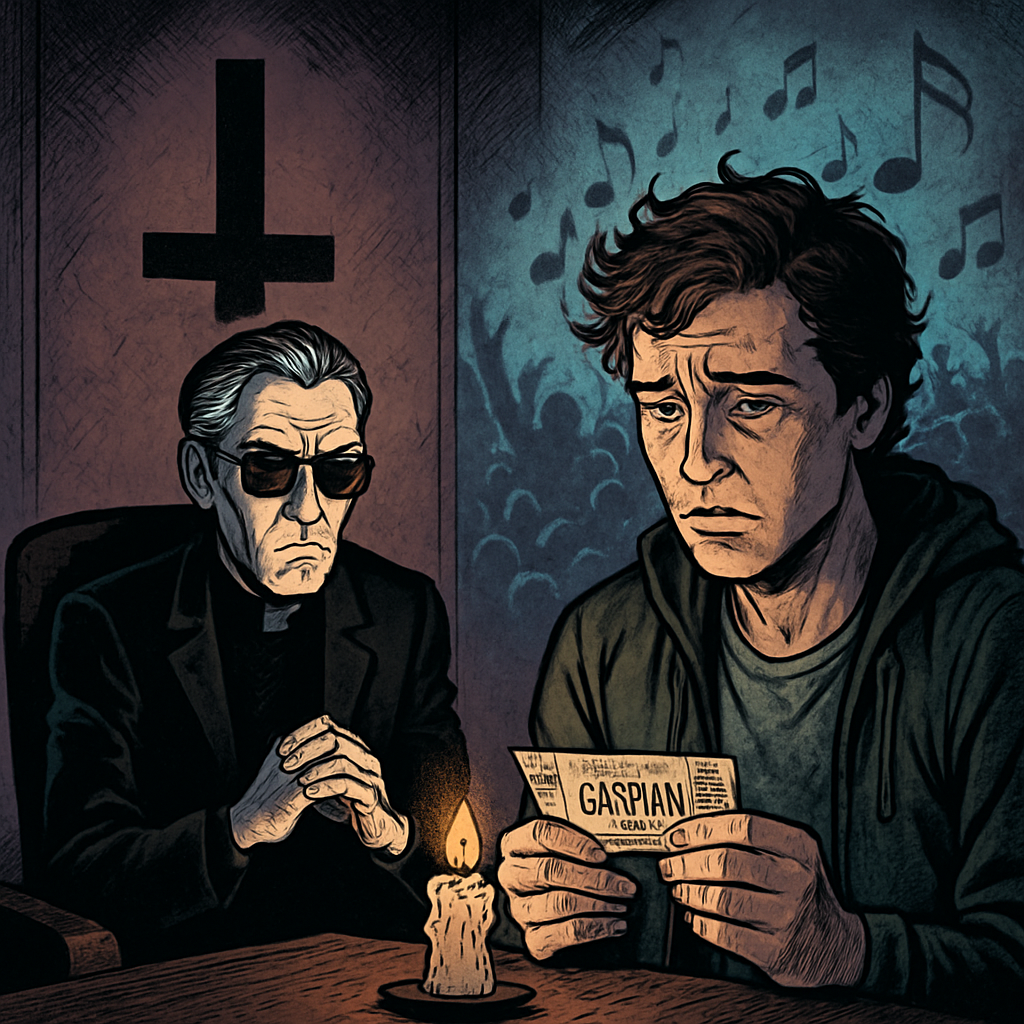
The first thing I noticed about Caspian was the ticket stub they kept turning over in their hands—not nervously, but ritually. Back and forth. Back and forth. Like a rosary bead for the faithless.
We’d been talking for seven minutes before they mentioned the concert at all. The second ticket, they said, almost as an afterthought. The real conversation began when I asked a simple question: “What are you actually afraid will happen if you go alone?”
The silence that followed told me everything. Caspian’s hands went still. The performative cheerfulness about “supporting the artist” cracked enough to let something real through. Not sadness. Shame.
The Architecture of Loneliness 🏗️
Here’s what nobody tells you about loneliness in the modern age: it’s not the absence of people—it’s the presence of a particular story you’re telling yourself about what your solitude means.
Caspian didn’t necessarily need a companion at a concert. They needed permission to reclaim their authentic will from a deeply embedded emotional architecture organized around a fundamental misinterpretation of what it means to be alone in public.
The research is compelling: concerts increase dopamine, oxytocin, endorphins. They foster social connection, reduce stigma, improve wellbeing. All true. But here’s what the studies don’t capture: the invisible cultural narrative that says shared experience is inherently superior to solitary experience. Attending alone becomes a confession of social failure rather than an act of authentic will.
This is where Caspian’s real work begins. Not in finding someone to go with, but in understanding the emotional frame that transformed a ticket—a literal object representing access to live music—into a referendum on their social worth.
Excavating the Emotional Architecture 🔍
When I began working with Caspian, we didn’t start with problem-solving. We started with excavation. The surface complaint was clear: “I don’t have anyone to go with, and I feel like a frustrated failure.” But emotional patterns are never that simple.
I needed to understand what had organized itself around this ticket. Caspian described the physical sensation: chest tightness and that particular fatigue that comes from holding tension. The emotional charge: disappointment mixed with something sharper—adjacent to shame. The need state? That’s where it got interesting.
On the surface, Caspian said they needed companionship. But when I pressed, what emerged was more specific: they needed evidence that they were the kind of person worth inviting.
The mini-story running underneath was corrosive: If I go alone, I confirm that I am alone. If I sell the ticket, I give up on being wanted. If I hold onto it, I’m a sad person clinging to false hope. Three options. All felt like self-betrayal.
Caspian wasn’t uncertain about the ticket. They were locked in a frame where every choice felt like self-betrayal because the frame itself was constructed around a false premise: that solitude in public equals unworthiness.
The Demon Within: Rejecting Authentic Self 👹
In our tradition, the demon isn’t external evil—it’s the rejected aspect of self that society taught us to hate. For Caspian, the demon wasn’t loneliness. The demon was the autonomous self—the part that could want something without needing external validation.
I asked: “What if the person you’re waiting to find is you? What if attending that concert alone is an act of authentic will rather than a confession of failure?”
The resistance was immediate. The inner voice rose up: That’s not how it works. Things are better shared. Going alone means something is wrong with me.
Yes, research shows that sharing experiences increases oxytocin. But the social neuroscience also demonstrates that attending concerts alone still provides significant mental health benefits. The reduction in stigma, the increase in empathy, the connection with the broader community—these aren’t contingent on having a plus-one.
What Caspian was experiencing wasn’t a neurochemical need for companionship. It was the activation of an emotional frame shaped by cultural invisible structures. The unspoken rule: valued experiences are shared experiences.
The demon here was the authentic self demanding to be heard underneath the voice saying I’m not worthy of my own company.
Sovereignty and Solitude: The Old Way 🗡️
In pre-Christian traditions that valued strength and self-reliance, there’s a concept called wyrd—often translated as fate, but more accurately understood as the sum total of one’s choices and actions shaping destiny. You are not a passive recipient of circumstance. You are an active author of your becoming through the force of your will.
The Norse understood something crucial: there is honor in standing alone. There is power in choosing your own path not because no one will join you, but because your authentic will demands it.
Caspian had internalized a specifically modern, specifically consumerist invisible structure: that experiences have value only if witnessed and validated by others. Social media has weaponized this. But it’s far older than technology.
Here’s the heretical truth: the concert will be special because you are attending it. Not because someone else is there to confirm its specialness. Your experience belongs to you. Your joy doesn’t require external ratification. Solitude in the presence of thousands of people who share your passion is not loneliness. It is presence.
What’s Actually Being Starved? 🎯
Caspian’s distress wasn’t actually about the relational need for companionship at this specific moment. It was organized around an identity need—the need for self-understanding and validation—that had become entangled with the relational need.
The psychological needs—autonomy, competence, relatedness—were being actively undermined by the emotional script. Caspian’s autonomy was being sacrificed to a beast. (an invisible structure). Their competence was being doubted. And the relational need was being weaponized—transformed from I want to share joy into I need external permission to have joy.
The emotional need for safety had become the problem. Caspian’s inner voice had created a frame where solitude felt unsafe—not physically, but socially, in terms of identity. What will it mean about me if I go alone? What story will I have to tell about myself?
When I pointed this out directly, Caspian began to shift. You could see the moment the frame became visible rather than invisible. The moment they could see their own thinking as a system rather than as truth.
“I’m not actually afraid of the concert,” Caspian said quietly. “I’m afraid of what it means.”
Exactly. And what it means is entirely up to them.-
The Ritual of Reclamation 🕯️
In our practice, ritual is a ceremony designed to reorganize emotional frames and create new intentional experiences that update the system’s predictive model.
For Caspian, I offered what I call a ritual of sacrifice and reclamation—not because ritual magic makes companions appear, but because ritual engages the deep structures that organize emotional patterns.
The Ritual of the Held Threshold:
Take the extra ticket—the one representing all the stories about what you’re supposed to be. In a private space, hold it. Feel the physical sensations. Notice what emerges. The tightness, the heaviness, the “should.” Sit with it without trying to change it.
Then, using a candle you choose for yourself, read aloud:
“I release the story that my worth is measured by having witnesses to my joy. I release the demand that I have to earn the right to company. By my own hand and will, I reclaim this night. I go not because I am desperate. I go because I am sovereign over my own realm.”
Burn the ticket. Not as destruction, but as transformation. The physical object carrying the emotional pattern is released. The neurochemical experience of decision, action, and intentional destruction creates new patterns. The body registers: I am capable. I am choosing. I am enough.
Then: Take the single ticket to the concert. One ticket. For one person. You.
This is the reclamation of authentic will.
Seeing the System, Not the Symptom 👁️
By the end of our work, Caspian had developed the ability to see the system creating the emotion rather than just experience the emotion itself.
They could say: “I notice I’m feeling disappointed. I notice there’s a story underneath that says solitude equals unworthiness. I notice this story came from somewhere. I notice the story isn’t actually true, but my body is still responding as if it is. I notice that I have a choice about whether to keep believing it.”
This is the difference between managing an emotion and understanding the architecture creating it.
Caspian could now hold the research without the invisible filter of yes, but that only works if you’re not alone. They could see that solitary experience still provides the benefits. The frame that made those benefits conditional on companionship could finally be questioned.
The Real Cost of Belonging 💰
Here’s what I told Caspian near the end, and it landed hard:
“Our culture makes you pay for solitude. It charges you a fee in the form of shame—the implication that being alone is a kind of failure, a social deficit that needs correcting. Every message about ‘finding your person,’ ‘not being alone,’ ‘pairing up’ extracts payment from your sense of self-worth. The ticket isn’t expensive. But the story that says you need someone else there to validate the experience? That’s costing you everything. That’s the real transaction.”
What Actually Happened ✨
Caspian went to the concert alone. But here’s what matters: they went as an act of authentic will, not as a resignation. They brought themselves—the whole self, including the discomfort, including the fear, including the grief that sometimes accompanies solitude.
They reported back: the music was transcendent. They cried. They felt the dopamine, the oxytocin, the connection with thousands of strangers unified in the moment. And they felt something else: the quiet power of knowing they had chosen this.
They were not there because they had to be, or because they were desperate, or because they were proving something. They were there because they wanted to be.
That’s the difference authentic will makes.
Redefining Companionship 🤝
The final piece wasn’t about accepting solitude. It was about redefining what companionship actually means. Caspian realized, slowly, that they did have a companion at the concert: themselves.
Not in the self-help platitude sense. But in the real sense—an adult who had chosen to show up, who was taking care of themselves, who was not waiting for permission to have joy.
The inner voice that had been critical, conditional, demanding proof of worth—that voice was quieter now. In its place was something that sounded more like the authentic self. Curious. Present. Not needing anything other than what was happening.
The extra ticket never haunted Caspian again. Because the frame had shifted. The invisible structure that said solitude equals failure had been seen, named, and rejected.
It didn’t disappear entirely—these things rarely do. But it lost its power. It became just a story, not the truth.
The Work of Becoming 🔥
This is the work of sovereign psychology. It’s not pretending that loneliness doesn’t exist. It’s not denying that shared experience has value. But it’s refusing to let invisible structures control your choices, and it’s about reclaiming your authentic will even when—especially when—that means standing alone.
Hail Wisdom. Hail Yourself. Hail Your Becoming.
The greatest gift you can give yourself is not the promise that you’ll never be alone. It’s the knowledge that when you are, you’re still worth your own company.
— Lucian Blackwood
- A Pilot Study of How Concerts Influence Mental Health Stigma …
- Concerts strike a chord with mental health – MSU Denver RED
- The Social Power of Live Events | Psychology Today
- The Secret of Attending Music Concerts in Post- Pandemic
- Going To Concerts May Help You Live Longer, Research Finds
- A systematic review of social outcomes for audience members
- Effects on personal and cultural wellbeing of attending free …