
The Friendship That Became a Battleground 🪖
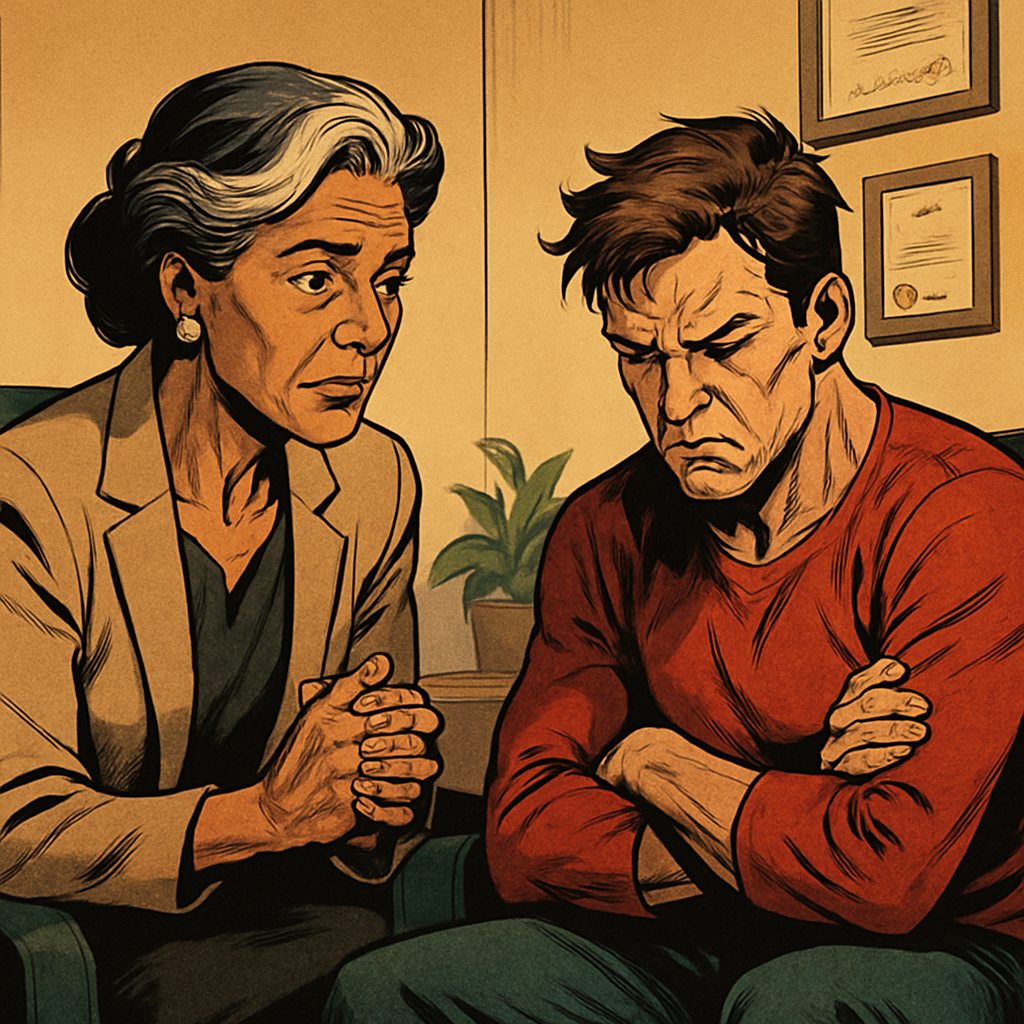
Tristan walked into my office looking devastated—his twenty-year friendship was still technically alive, but it had transformed into something unrecognizable. He sat down, crossed his arms, and said, “I think I’m turning into the kind of person I hate.” That’s when I knew we were dealing with something significant.
When Effort Becomes One-Sided 💔
Tristan’s friend had moved to the city and shifted from warm and engaged to dismissive and cold. Tristan kept showing up—texting, planning hangouts, investing emotional energy—while his friend responded with minimal availability. The dynamic was classic imbalanced attachment.
What made it worse was Tristan’s response. When his friend made cutting remarks, Tristan would fire back with equal intensity. Then came the guilt and shame spiraling afterward. He felt trapped between protecting himself and becoming someone he despised.
Tristan was caught in what I call the “friendship hostage situation”—holding onto a relationship because of its history, not its current reality. His emotional system was sending conflicting signals: body tensing when his friend texted, anger mixed with desperate hope, all organized around one core belief: “If I let this friendship die, I’ve failed.”
The Attachment Patterns Running Underneath ⚙️
Research shows that dismissing attachment patterns—emotional unavailability, withdrawal, minimal communication—are common in many friendships. Tristan’s friend likely wasn’t just being rude; he was operating from insecure, avoidant style attachment, running a protective script that said: “Keep people at arm’s length so they can’t see I’m struggling.”
But here’s what Tristan couldn’t see: his own attachment pattern was the real issue. Every time his friend pulled away, Tristan pushed harder. Every dismissal triggered deeply ingrained beliefs about being worthy of love only through persistent effort—a narrative from his past that no longer served him.
When I asked, “What need are you trying to meet by staying in this friendship?” Tristan finally admitted: “I need to know I’m not the kind of person who gives up on people.”
There it was. His identity wasn’t being threatened by the friendship ending—his sense of self was being threatened. The relationship had become less about connection and more about proving something to himself.
The Retaliation Trap 🔄
Both Tristan and his friend were caught in the same insecure attachment pattern, just from different angles. His friend was withdrawing; Tristan was pursuing and then punishing. When Tristan snapped back with intentionally hurtful comments, he was running an emotional protection script: “If you hurt me, I’ll hurt you back so you know how it feels.”
It makes perfect sense until you realize it’s destroying the thing you’re trying to protect.
I told him something that seemed to land: “You’re not a bad person for wanting to hurt him back. You’re just a person whose emotional system is trying to solve a problem it doesn’t have the right tools for.”
Building Better Emotional Tools 🛠️
Over several sessions, we worked on understanding the systems creating his emotions, not just managing them. Tristan started recognizing that his friend’s withdrawal had nothing to do with Tristan’s worth and everything to do with his friend’s inability to manage self-imposed isolation.
We practiced emotional clarity. Instead of feeling one massive bubble of “angry-hurt-guilty-desperate,” Tristan learned to distinguish between distinct feelings: “I’m feeling rejected. I’m also feeling protective of my time. I’m also grieving what this friendship used to be.” Making finer emotional distinctions gave him options beyond retaliation or silent suffering.
The real breakthrough came when Tristan held two truths simultaneously: His friend was struggling and being unkind, AND I deserve better. Integration, not elimination. He didn’t have to choose between compassion and boundaries.
What Changed 🌱
Tristan eventually had an honest conversation with his friend—not to fix things, but to be truthful. “I care about you, but I can’t keep showing up for someone who treats me like an inconvenience.” His friend, surprisingly, admitted he’d been drowning and didn’t know how to ask for help without appearing weak.
Did the friendship return to its former glory? No. But it found a new, more honest equilibrium. Tristan stopped performing friendship maintenance like a second job, and his friend became more intentional when they connected.
The Real Issue 🎯
Friendship struggles are rarely just about the other person being difficult. They’re about invisible structures—unspoken rules about loyalty, effort, and what makes something “worth it”—that we’ve internalized without realizing it.
Tristan’s friendship didn’t need saving. Tristan’s relationship with his own needs needed updating. Once he could see that his emotional patterns were organized around proving his worth through relationship persistence, he could rewrite that script.
The last thing he said was, “I wish someone had told me years ago that letting go isn’t the same as giving up.” I told him someone just did.
Sometimes the most loyal thing you can do for a friendship is stop pretending it’s something it isn’t – Sophia Rivera ✨
- [PDF] Exploring Attachment Styles and Friendship Quality in Boys and Girls
- [PDF] Convergence and Divergence in Attachment Style Across Male and …
- Exploring the Association between Attachment Style, Psychological …
- How Attachment Style Shows Up In Friendships
- [PDF] A Net of Friends: Investigating Friendship by Integrating Attachment …
- Friendship Attachment Style Moderates the Effect of Adolescent …
- That’s what friends are for: anxious and avoidant attachment …
- Friendships in Emerging Adulthood: The Role of Parental and …