
The Invisible Threads of Addiction and Family Love 🕸️
The serpent of addiction rarely strikes alone. It coils first around one victim, then stretches tendrils outward, ensnaring those who love too much, who help too much, who shield too much. As we seek to rescue others, we sometimes find ourselves drowning alongside them, tethered by invisible threads of misguided compassion. These are the hardest threads to sever—they feel so much like love.
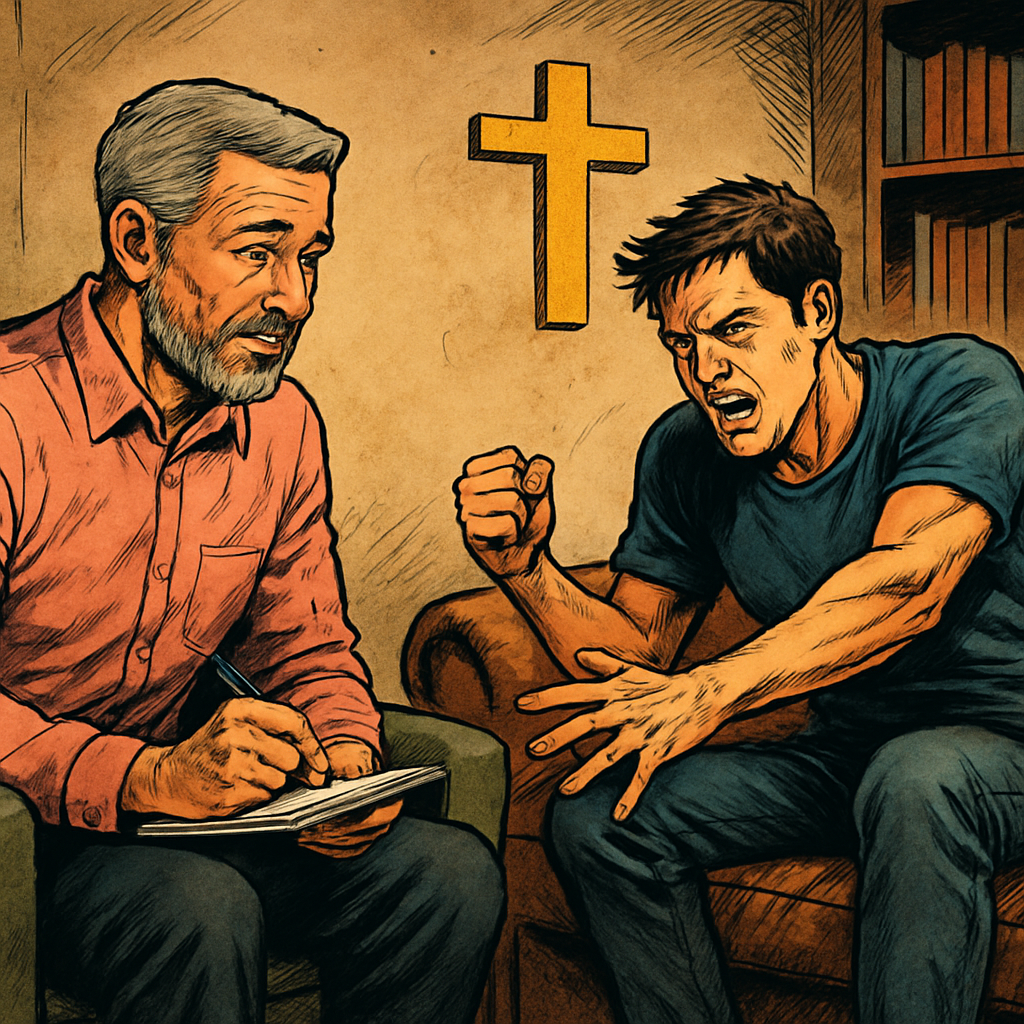
I’ve spent countless hours in my therapy office witnessing the ripple effects of substance use disorders—how they transform not just the user, but entire family systems. One case has remained particularly vivid in my memory: Tyler, a bright computer science student in his mid-twenties who first sat in the worn leather chair across from me, his shoulders hunched forward as if carrying an invisible weight.
Tyler’s father had passed away three years prior, leaving a substantial life insurance policy to support his mother. What began as occasional drinking to numb her grief had gradually escalated into constant use of alcohol and marijuana. As we talked, Tyler’s words tumbled out with increasing urgency, revealing the complex web of emotions and behaviors that had developed between mother and son.
The Entangled Dance of Codependency 💃
“I just want to help her,” Tyler explained during our first session, hands fidgeting in his lap. “She asked me to help manage her finances after Dad died because technology isn’t her thing. That’s when I saw how much she’s spending on alcohol and weed—thousands each month from Dad’s life insurance money.”
What Tyler was describing represented a classic pattern I’ve observed countless times: the entangled dance of codependency. Tyler’s helping behaviors—managing his mother’s finances, providing technological support, and cleaning up the consequences of her substance use—had formed powerful emotional scripts that felt both natural and necessary to him.
“Every time I try to bring it up,” Tyler continued, “she gets defensive. She’ll say things like, ‘I’m not living on the streets’ or ‘At least I’m not on heroin.’ Then I feel guilty for even mentioning it.”
His mother’s comparison-based defense mechanisms were textbook denial strategies, but what fascinated me was how this interaction had formed rigid emotional frames for Tyler—interpretive lenses through which he viewed his responsibilities toward his mother and his own identity as a son.
“I feel like I’m betraying her when I think about stepping back,” he admitted, tears welling in his eyes. “But I’m also so angry. That money was supposed to support her—support us—not destroy her.”
The Wisdom Within Our Fear 😰💡
Fear is rarely just fear. When we peel back its layers, we often discover profound wisdom trying to speak through our anxiety. Tyler’s fear about his mother’s substance use contained multiple layers—each carrying physical sensations, emotional charges, unmet needs, and narratives about what it meant to be a good son.
“I’m scared all the time,” Tyler confessed in our third session. “Scared she’ll drink herself to death. Scared the money will run out. Scared of what will happen if I stop helping her.”
His fear signaled important needs that weren’t being met—needs for security, predictability, and the preservation of his remaining parent. Yet simultaneously, his helping behaviors were inadvertently enabling his mother’s continued substance use, creating what therapists call an “invisible structure”—unspoken rules and expectations that maintained the dysfunctional system.
In our work together, I helped Tyler develop greater emotional granularity—breaking down his overwhelming emotions into more specific, manageable components. This allowed him to see that what he called “guilt” actually contained fear of abandonment, grief over his father’s death, anger at his mother’s choices, and authentic love for her wellbeing.
Biblical Reflection: The Parable of Boundaries ✝️
The Bible offers us numerous examples of healthy boundaries, though we don’t always recognize them as such. Jesus himself demonstrated clear boundaries in his ministry, sometimes withdrawing from crowds to rest, saying no to some requests, and allowing people to experience the natural consequences of their choices.
“Tyler,” I said during one particularly difficult session, “I’m reminded of how Jesus responded to the rich young ruler in Mark 10. When the man couldn’t let go of his wealth, Scripture tells us ‘Jesus looked at him and loved him’ before letting him walk away. Jesus loved him enough to respect his choice, even though it wasn’t the choice Jesus hoped he would make.”
This biblical example resonated deeply with Tyler. “So you’re saying I can love my mom while still letting her face the consequences of her choices?” he asked.
“Exactly. Love doesn’t always mean protecting people from reality. Sometimes the most loving thing we can do is allow truth to be visible.”
The Sacred Work of Setting Boundaries 🚧
Over the following months, Tyler began the difficult work of disentangling his own well-being from his mother’s choices. We worked to identify the difference between genuine helping and enabling—a distinction that relies heavily on understanding how actions either support or undermine accountability.
Together, we crafted a plan for graduated withdrawal from these enabling behaviors while simultaneously increasing his emotional support and clear communication.
“I’m going to help you transition financial management back to me,” Tyler practiced saying in our sessions. “I love you too much to continue being part of something that’s hurting you.”
This approach acknowledged what contemporary research confirms—that while interventions can help initially, lasting recovery usually requires the individual’s voluntary engagement. Tyler couldn’t force his mother into recovery, but he could create conditions where her choices became clearer to her.
When Love Takes New Forms 💗
The journey wasn’t linear or easy. Tyler’s mother initially responded with anger, manipulation, and increased drinking when he began setting boundaries. But slowly, as Tyler remained consistent in his love while refusing to enable, small shifts began to occur.
Three months after our work began, Tyler arrived at my office with a different posture—shoulders back, eyes clear.
“She agreed to talk to someone,” he said, a mix of caution and hope in his voice. “Not rehab yet, but she’s seeing a counselor who specializes in grief and substance use. And I’m starting to sleep through the night again.” 😌
Tyler’s mother’s journey toward recovery would have its own timeline—one neither Tyler nor I could control. But Tyler’s journey toward healthier boundaries and emotional clarity was well underway. He had begun to understand that love sometimes means stepping back, that helping sometimes means not helping, and that God’s presence remains constant even in our most painful family struggles.
As we concluded our final session together many months later, Tyler reflected, “I always thought loving my mom meant saving her. Now I understand that true love respects her journey while taking care of my own.”
Finding Grace in Small Acts of Courage 🌟
In the sacred space of therapy, I’ve witnessed countless variations of Tyler’s story—children loving parents, parents loving children, spouses loving partners—all caught in the painful tangle of substance use and codependency.
What I’ve learned is that the path toward healing rarely involves dramatic interventions or perfect solutions. Instead, it unfolds through small acts of courage: setting one boundary, speaking one truth, allowing one natural consequence.
And in these small acts of courage, grace finds room to work.
—Dr. Samuel Hartwell, remembering that sometimes the most loving gift we can offer another is the freedom to find their own way back to wholeness. 🙏
- Effectiveness of a Web-Based Intervention for Preventing Substance …
- Comparative Effectiveness of Different Treatment Pathways for …
- THE EFFECTIVENESS OF COMPULSORY DRUG TREATMENT
- Evidence-Based Interventions for Preventing Substance Use …
- More teens than ever are overdosing. Psychologists are leading …