
The Widow and the Gardener 💕
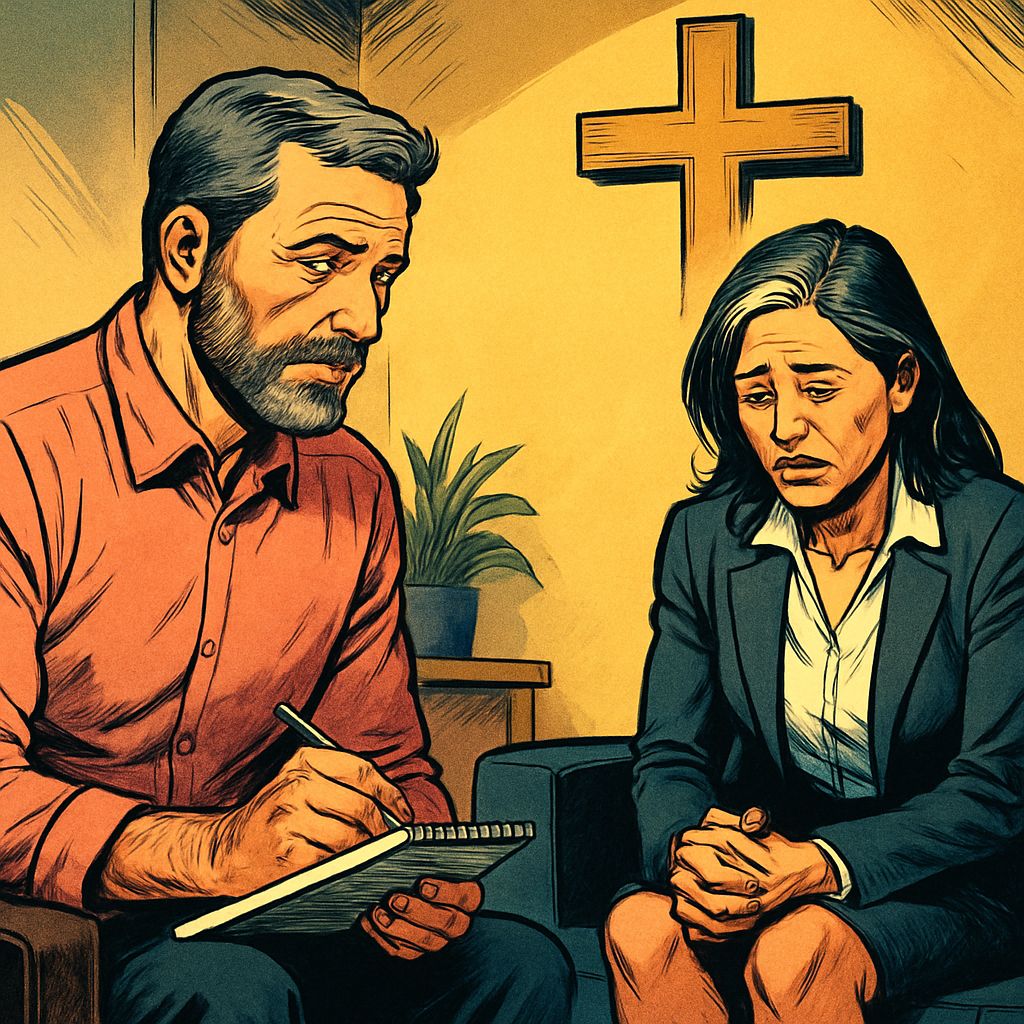
I remember the afternoon Tessa first walked into my office. At 42, she had already weathered significant loss but had found her footing again. A successful business consultant and widow of three years, she was impeccably dressed, her silver-streaked dark hair pulled back in a neat chignon. But her composed exterior belied the turmoil within.
“I feel like I’m sixteen again,” she confessed with a self-conscious laugh, “hiding a boyfriend my parents don’t approve of. Except I’m middle-aged, and it’s my children doing the disapproving.”
The source of this disapproval was Ron, a 29-year-old landscaper who had transformed not only Tessa’s neglected garden but, it seemed, her heart as well. Their connection had blossomed organically over months of work on her property, conversations over lemonade, and shared laughter. Yet what felt healing and life-giving to Tessa had become a source of consternation to her adult children and social circle.
“They act like I’ve lost my mind,” she said, her voice catching. “My daughter called me ‘desperate.’ My son barely speaks to me. And my friends… They make these jokes about ‘robbing the cradle’ when they think I can’t hear.”
The Tension Between External Validation and Internal Truth ⚖️
In our early sessions, I noticed how Tessa’s emotional responses around relationships were heavily influenced by messages about external validation. “When I’m with Ron, I feel alive,” Tessa shared. “But then I see the look on my daughter’s face or get another lecture from my sister about ‘what people will think,’ and suddenly I’m questioning everything.”
Tessa was experiencing what psychologists call ambivalence in intergenerational relationships—the simultaneous presence of positive and negative feelings that create internal conflict. She was caught between two profound needs: connection with her family and social world, and personal happiness and fulfillment.
“It sounds like you’re navigating between your need for family harmony and your need for authentic joy,” I observed. Tessa nodded, tears filling her eyes. “Exactly. And I don’t know which should win.”
Biblical Reflection: Ruth and Boaz 📖
During one particularly difficult session, I shared the story of Ruth and Boaz from Scripture—a relationship that crossed significant social boundaries of age and ethnicity in ancient times.
“Ruth was a young Moabite widow who found herself in a foreign land,” I explained. “Boaz was an established Israelite property owner, considerably older. Their union wasn’t what anyone would have expected, yet it became part of God’s redemptive story.”
Tessa sat with this a moment. “I never thought about it that way. Their age gap would have raised eyebrows too.”
“Scripture often shows us that God’s work in human hearts doesn’t always follow social convention,” I replied. “The question isn’t whether a relationship meets others’ expectations, but whether it aligns with God’s character and brings forth good fruit.”
This perspective helped shift Tessa’s mindset from shame to discernment—not dismissing others’ concerns, but placing them in proper context.
The Unexpected Strength in Opposition 💪
As our sessions continued, I introduced Tessa to research on what psychologists call “The Romeo and Juliet Effect”—the paradoxical way that opposition can sometimes strengthen romantic bonds.
“When everyone started criticizing us, Ron and I actually grew closer,” she acknowledged. “There’s something powerful about someone standing by you when the world seems against you.”
This observation revealed something important: Ron’s responses to opposition showed emotional maturity beyond his chronological age—a fact Tessa’s family had overlooked in their focus on the number gap.
“When my son refused to join us for dinner, Ron just squeezed my hand and said, ‘He’ll come around when he sees how happy you are.’ No defensiveness, no anger. Just patience.”
Identity Reconstruction and Sacred Permission ✨
One breakthrough came when we explored how Tessa’s identity as a widow had become intertwined with others’ expectations.
“I realize I’ve been seeking permission to be happy,” she said during our sixth session. “As if continuing to grieve were somehow more respectful to David’s memory.”
“Tell me about what David valued in your relationship,” I prompted.
Tessa smiled genuinely. “Our freedom to be ourselves. He always said that was the secret to our marriage—we never tried to make each other into someone else.”
“So what would David want for you now?” I asked gently.
The question hung in the air, charged with significance. When Tessa spoke again, her voice had changed. “He would want me to live fully. He would care more about how Ron treats me than about what year he was born.”
This realization marked a turning point—what I call sacred permission. She began to see that honoring her late husband’s memory didn’t mean living perpetually in the past, but carrying forward the values that had made their relationship meaningful.
The Pastor’s Heart: On Grief and New Beginnings 🕊️
In our work together, I found it essential to acknowledge the spiritual dimension of Tessa’s journey. Grief isn’t merely a psychological process but a spiritual one as well.
“The Bible doesn’t prescribe a timeline for grief,” I shared. “But it does speak powerfully about God bringing new life where there has been loss. Think of Joseph telling his brothers, ‘What you meant for evil, God meant for good.'”
“So you don’t think it’s wrong? To find happiness again?” Tessa asked tentatively.
“I believe the God who gave us the capacity for love rejoices when that gift is exercised with integrity and care. New love doesn’t diminish what came before—it testifies to the resilience God has woven into human hearts.”
Setting Boundaries with Grace 🤝
As our work progressed, Tessa needed practical strategies for navigating the disapproval she faced. We worked on developing what I call “meta-emotional intelligence”—understanding not just her emotions but the systems creating them.
“My daughter made another comment about how ‘weird’ it is to see me with someone so young,” Tessa reported one day. “But instead of getting upset, I just said, ‘I understand this is uncomfortable for you. I’m still your mom, and I’m still the same person. My happiness with Ron doesn’t change my love for you.'”
This approach—acknowledging others’ discomfort while gently affirming her own boundaries—gradually began to shift the family dynamics.
A Garden in Bloom 🌸
In our final sessions together, Tessa shared that she had invited her children over for a garden party—a symbolic gesture showcasing both Ron’s literal work transforming her neglected garden and the metaphorical flourishing of her own life.
“My son actually came,” she said, beaming. “He was stiff at first, but when Ron started talking about the native plant restoration project they’re doing at the community center, I could see him starting to see Ron as a person, not just ‘Mom’s young boyfriend.'”
“And how did that feel for you?” I asked.
“Like watching flowers bloom after a long winter. I’m not naive enough to think everyone will fully embrace our relationship overnight. But I’m no longer asking for permission to be happy.”
This transformation illustrated beautifully how healing often involves not eliminating parts of ourselves, but integrating them into a more coherent whole. Tessa hadn’t abandoned her role as mother or her connection to her late husband’s memory. Instead, she had expanded her identity to include this new chapter with grace and authenticity.
Prayer for the Journey 🙏
Before Tessa completed therapy, we shared a moment of prayer:
Lord of new beginnings, we thank You for the gift of love in all its seasons. Grant Tessa wisdom as she continues to navigate these relationships. May her family see beyond age to character, beyond convention to the authentic joy You’ve provided. And may she walk in the confidence of Your approval, which transcends all human judgment. Amen.
As Tessa left my office that final day, I was reminded once again of the sacred privilege of witnessing a soul stepping fully into its truth—not in defiance of others, but in humble allegiance to the authentic self God created her to be.
The heart has its own timing—a sacred rhythm that often confounds those around us. As C.S. Lewis wrote, “To love at all is to be vulnerable.” Perhaps nowhere is this vulnerability more evident than when we dare to love against the current of social expectation, trusting that sometimes the most faithful act we can offer is to receive the unexpected gifts God places in our path. 💝
—Dr. Samuel Hartwell
- Why adult children go no contact, according to science – YouTube
- When Your Adult Children Have Relationships with People You Don …
- [PDF] Factors Related to Parental Approval of Adult Childrens …
- What to Do When Your Adult Children Don’t Want You to Remarry
- A Decade of Research on Intergenerational Ties – PubMed Central
- Ep #92: Dating When Kids Don’t Approve – Coaching with Krista
- Handling Estrangement: How to Deal with Your Adult Children’s …
- Why would adult children disapprove of their parent’s happiness?
- Just the Two of Us? How Parents Influence Adult Children’s Marital …
- When You Loathe Your Adult Child’s New Love | Psychology Today
- Five Reasons Why Adult Children Become Estranged From Their …
- 6 Sources of Tension Between Adult Children and Their Parents