
What No One Tells You About Ambiguous Relationship Messages
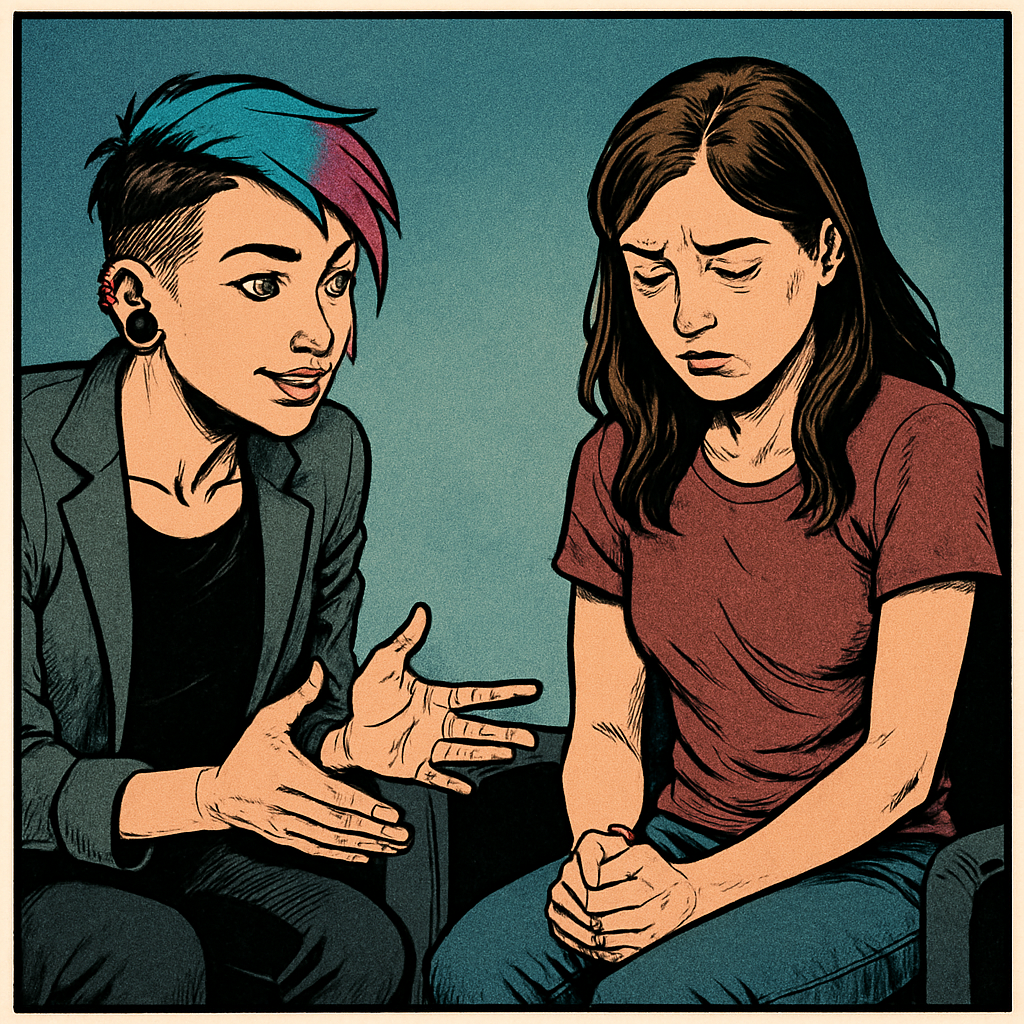
Tessa sat across from me with the kind of anxious energy that makes you want to physically hold someone’s nervous system for them. She was twenty-two, four months into a relationship that felt simultaneously like the best and worst thing that had ever happened to her. Her boyfriend had just sent her a text message that might as well have been written in ancient Greek: “I think I rushed into this. I love you but I don’t want to hurt you.” Then—because the universe has a cruel sense of humor—he’d added nothing else. No context. No timeline. No actual information. Just vibes and emotional landmines. 🥲
Tessa had been rereading that message for three days like it was a sacred text that might reveal its secrets if she just squinted hard enough.
Here’s something wild: studies show that uncertainty in relationships activates the same neural pathways as physical pain. Literally. Your brain processes “I don’t know where we stand” the same way it processes stubbing your toe, except you can’t ice this one or take an Advil for it.
We’re seeing this pattern everywhere right now—partners sending cryptic messages that sound deep but actually communicate nothing, leaving the other person to decode emotional hieroglyphics at 2 AM.
The Emotional Byte You’re Carrying ✨
When Tessa described reading that text, her whole body changed. Shoulders tensed. Breath shallow. That’s an emotional byte forming in real-time—a complete package of physical sensation (chest tightness), emotional charge (panic mixed with confusion), need state (desperate for certainty), and a story (“I’m about to get hurt again”).
The thing about emotional bytes is they’re predictive. Your system takes past experiences and creates models for how to respond in the future. Tessa had collected enough “I’m not ready” and “It’s not you, it’s me” bytes from previous situations that her body was already three steps ahead, preparing for abandonment before it even happened.
No cap, she was living in a future that hadn’t occurred yet.
The Red Flags Nobody’s Talking About 🚩
Red flag one: Vague declarations of love paired with warnings about potential hurt. That’s not protection—that’s offloading anxiety onto you while maintaining plausible deniability.
Red flag two: Creating a crisis through ambiguity and then disappearing. If he’s overwhelmed, cool. We all are. But making his overwhelm your emotional emergency without giving you any tools to navigate it? That’s not consideration. That’s chaos delegation.
Red flag three: You’re doing more emotional labor trying to decode his feelings than he’s doing actually communicating them.
The Emotional Frame Running the Show
“So what are you most afraid of?” I asked Tessa.
“That I’ll choose wrong,” she said immediately. “Like, if I give him space and he leaves, I didn’t fight for it. But if I don’t give him space and he leaves, I was too much.”
There it is. The frame.
Tessa was operating inside an emotional frame where she was responsible for managing both her feelings AND his readiness AND the outcome of the entire relationship. This frame made her the protagonist in a story where she had to optimize her behavior perfectly or face inevitable rejection.
But here’s what that frame was hiding: his uncertainty wasn’t something she could solve through better behavior. She couldn’t “supportive girlfriend” her way into making him ready.
The frame was making her hypervigilant, trying to read every signal, adjusting her emotional temperature to match his, losing herself in the process.
The Granular Truth of the Matter
Friendly reminder: When someone tells you they’re not ready, they’re giving you information about their capacity, not a problem for you to solve. Their overwhelm is not your thesis project. 💀
Research shows that attachment anxiety intensifies when we receive mixed signals—when someone says “I love you” but acts distant, our nervous system goes into overdrive trying to resolve the contradiction. That’s not you being dramatic. That’s your empathic engine and needs navigator fighting each other, one trying to understand his experience, the other screaming that your relational needs aren’t being met.
What Actually Happened in the Room
I asked Tessa to try something. “What if his uncertainty has absolutely nothing to do with your worthiness?”
She looked at me like I’d just suggested the earth was flat.
“I mean it,” I continued. “What if he’s genuinely overwhelmed by his own stuff—financial stress, lack of purpose, his own attachment wounds—and he’s communicating it badly because he’s twenty-four and hasn’t developed the emotional granularity to say ‘I’m struggling with my own capacity for intimacy right now and I need to figure that out’?”
“But then why wouldn’t he just say that?” Tessa asked.
“Because most people don’t have the tools to transform their emotional bubble into fizz,” I said. “They feel this massive, overwhelming thing and they communicate it as ‘I rushed in’ because that’s the closest approximation they have. It’s not your job to translate his emotional experience into coherent language.“
The Script Nobody Asked For
Tessa had an emotional script running: When someone I love expresses doubt, I must immediately begin damage control and prove I’m worth staying for.
This script was automatic. It felt inevitable. It had been formed through experiences where love was conditional and constantly needed to be re-earned.
But scripts create self-fulfilling prophecies. The more she tried to manage his feelings and optimize her response, the more she abandoned her own needs. The more she abandoned her needs, the more resentment built. The more resentment built, the less authentic the relationship became.
“What would happen,” I asked, “if you just… told him the truth? That ambiguity feels terrible and you need actual information to make decisions about your own life?”
She physically recoiled. “That feels too vulnerable.”
“More vulnerable than staying in limbo while your nervous system treats every text notification like a potential threat?”
Touché.
The Thing About Boundaries That TikTok Gets Wrong
Everyone talks about boundaries like they’re walls. They’re not. They’re sacred spaces that define where your emotional responsibility ends and someone else’s begins.
Tessa’s boundary wasn’t “I’m leaving” or “I’m staying.”
It was: “I need clarity to make informed choices about my emotional investment. If you’re not ready, I respect that, but I can’t live in indefinite uncertainty while you figure it out.”
That’s not an ultimatum. That’s honoring the relational need for availability and responsiveness while maintaining the psychological need for autonomy.
See the difference?
Three Signs You’re Sacrificing Yourself for Someone Else’s Uncertainty
1. You’re constantly trying to decode their emotional state instead of checking in with your own. Your needs navigator has been hijacked by your empathic engine.
2. You feel responsible for making them comfortable with their own feelings. Their inner voice is critical? Not your renovation project.
3. You’re willing to accept ambiguity because you’re afraid that asking for clarity will push them away. Translation: you’re choosing their potential comfort over your actual wellbeing.
The Conversation We Need to Have About Men and Emotional Labor
Look, I have empathy for Tessa’s boyfriend. Studies show young adults are struggling with unprecedented levels of anxiety, financial stress, and lack of purpose. The mental health crisis among this generation is real and documented.
B U T.
Being overwhelmed doesn’t exempt you from basic relational responsibility. It doesn’t give you a free pass to create anxiety in your partner and then ghost the conversation.
Women are socialized to be emotional translators, to do the invisible labor of managing everyone’s feelings. We’re taught to be understanding, to give space, to not be “too much” or “too needy.”
Meanwhile, dudes are out here sending “I love you but I’m confused” texts and then going radio silent like that’s normal communication.
It’s giving main character energy, but make it avoidant attachment. 🤌
What Tessa Actually Needed (And What You Might Need Too)
Tessa didn’t need strategies to be more supportive or tips on giving him space.
She needed permission to prioritize her emotional safety.
She needed to understand that her relational needs—for consistency, availability, and honest communication—weren’t “too much.” They’re literally baseline requirements for a functional relationship.
She needed to see that the invisible structure operating here was one where women’s emotional needs are framed as optional while men’s emotional struggles are framed as crises requiring accommodation.
She needed to know that choosing herself wasn’t selfish. It was sanity.
The Meta-Emotional Intelligence Move ✨
Here’s what shifted for Tessa: instead of managing the emotion itself (anxiety about his uncertainty), she started understanding the system creating the emotion.
Her anxiety wasn’t irrational. It was her needs navigator screaming that her relational needs weren’t being met. Her impulse to fix everything wasn’t weakness. It was an emotional script formed in environments where love was conditional on her emotional management skills.
Once she could see the system, she could work with it instead of being driven by it.
That’s meta-emotional intelligence. Not controlling emotions. Understanding what creates them.
Where Things Landed
Tessa sent her boyfriend a message. Not aggressive. Not accommodating. Just honest.
“I care about you and I want to support you through whatever you’re dealing with. But I can’t exist in indefinite ambiguity. I need to know if you’re working through something with a timeline, or if you’re genuinely questioning the relationship. Both are valid, but I need information to make choices about my own emotional investment.”
He responded within an hour. Turns out he’d been dealing with job stress and family pressure and had convinced himself he was “too much of a mess” for a relationship. He wasn’t questioning them. He was questioning his capacity.
They’re still together, working through it with actual communication now.
But here’s the thing—even if he’d said “I need to end this,” Tessa would have been okay. Because she’d stopped outsourcing her worth to his readiness.
The Truth Nobody Wants to Hear
Sometimes people aren’t ready. Sometimes they rush in before working through their own stuff. Sometimes overwhelm is real and legitimate.
And none of that means you have to set yourself on fire to keep them warm while they figure it out.
You can have compassion for someone’s struggle without making their struggle your personality.
You can hold space for their process without abandoning your needs.
You can be supportive without being a martyr.
Reminder: Their uncertainty about the relationship is information about them, not evidence about your worth. Read that again. Screenshot it. Send it to your group chat. Get it tattooed. I don’t care. Just integrate it. 💀
The Pattern Living Rent-Free in My Head
After Tessa left, I thought about how many versions of her I’ve seen. Different names, different details, same emotional byte: If I’m perfect enough, understanding enough, supportive enough, they’ll choose me.
That byte gets formed early. Usually in relationships where love felt conditional. Where approval required constant optimization of behavior.
And it creates a frame where your value is perpetually on trial, where every relationship becomes a test you might fail, where other people’s ambivalence becomes your emergency.
The work isn’t learning to tolerate uncertainty better.
The work is building an internal structure where your worth isn’t determined by someone else’s readiness.
That’s the integration we’re actually after.
—
Here’s your friendly reminder that “I don’t want to hurt you” is often code for “I’m about to hurt you but I want credit for warning you first.” Guard your peace like it’s your screen time limits. Both are sacred and both will save your life. ✨
- [PDF] Sources of Anxiety in Emerging Adult Relationships
- Young adult partner phubbing and relationship satisfaction – Frontiers
- Long-Term Risks and Possible Benefits Associated with Late …
- The Rise of Anxiety and Depression among Young Adults in the …
- On Edge: Understanding and Preventing Young Adults’ Mental …
- Relationships with Caring Adults During Childhood Provide a Buffer …
- Effects of Personal Relationships on Physical and Mental Health …