
🌿 The Sacred Space of Acknowledgment
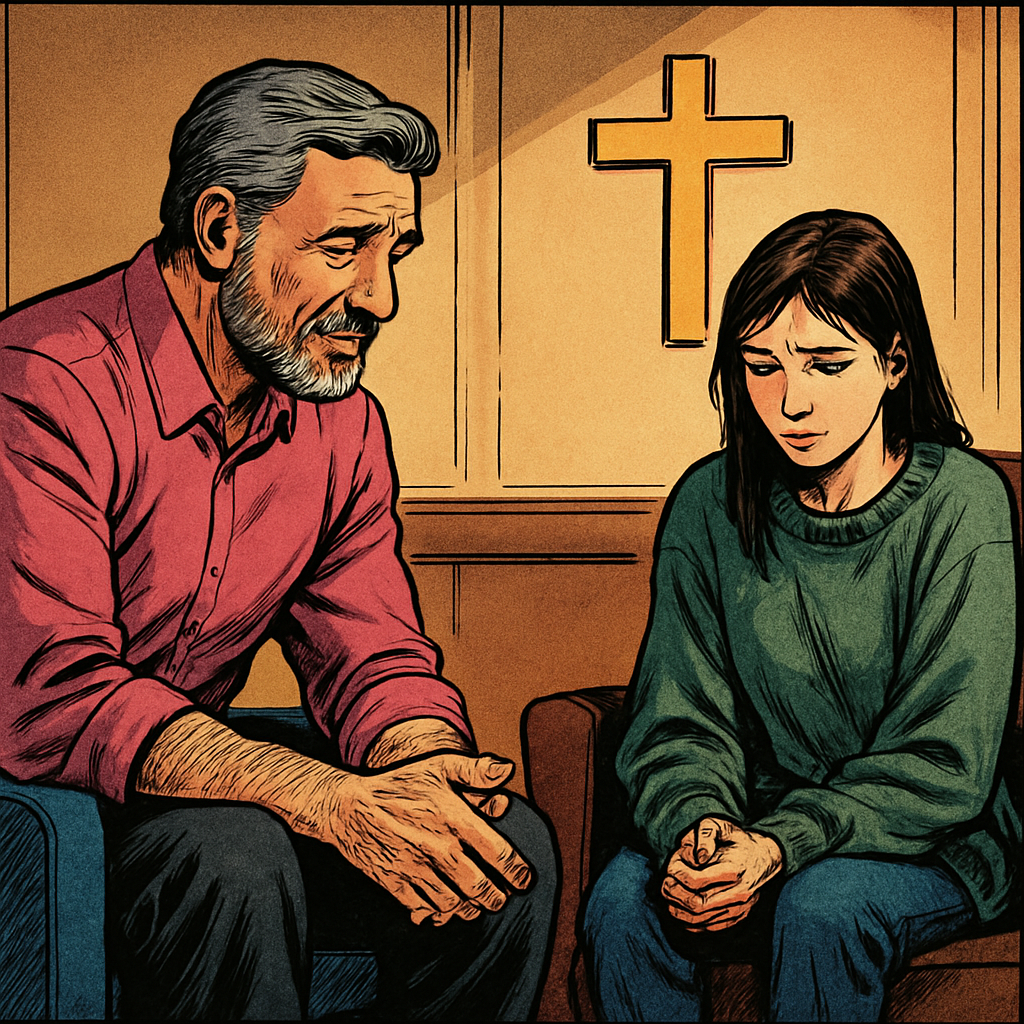
The words tumbled from her like leaves in autumn – scattered, trembling, and carrying the weight of stories yet untold. I watched her hands knot together, white-knuckled, as if trying to physically contain emotions too volatile to trust. Eighteen years old and carrying burdens that would buckle the shoulders of someone twice her age.
Tanya arrived at my office on a Tuesday afternoon in late September, wearing a sweater several sizes too large that seemed to swallow her slender frame. It was her third attempt at therapy – the first two ending when well-meaning counselors had suggested prayer and patience as primary solutions to her workplace harassment.
“I can’t just quit,” she began, her voice quiet but edged with frustration. “My grandmother needs her medication. I need to pay rent. And campus jobs are impossible to get right now.” She paused, eyes searching my office as if looking for evidence that I might dismiss her concerns as easily as others had. “But these men – these customers – they say things. They lean in close. One tried to touch my hand yesterday when I gave him his change.” 😔
Her words hung in the air between us, weighted with unspoken history. Each inappropriate customer interaction wasn’t simply triggering anxiety; it was activating entire clusters of emotional information connected to her previous assault.
“And every time it happens, I’m right back there again,” Tanya continued, her breathing shallow. “I can’t breathe. I can’t think. I just freeze and smile like nothing’s happening because that’s what we’re supposed to do, right? The customer is always right?”
What Tanya described wasn’t merely workplace harassment – it was a profound disruption of her emotional navigation system. Her brain, still processing earlier trauma, was creating a frame through which every male customer interaction was filtered. This wasn’t weakness or hypersensitivity – this was her nervous system functioning exactly as designed: protecting her from perceived threats based on previous experiences.
“No,” I said gently. “The customer is not always right. And you are not wrong for feeling what you feel.” ✨
The relief on her face was immediate and palpable.
💔 The Wounds Behind the Wounds
“Tell me about your manager’s response when you reported these incidents,” I asked during our second session.
Tanya’s laugh was hollow. “He said I should be flattered. That customer attention means I’m doing my job well.” Her eyes darkened. “Then he asked if I was on my period.”
Behind her words, I could sense the formation of automatic behavioral patterns shaped by previous experiences. Her script was clear: Authority figures will minimize my pain. Speaking up leads to further harm. Safety requires silence and compliance.
As we continued our work together, I realized that Tanya’s distress stemmed not just from the harassment itself but from a collapse in her needs hierarchy. Her psychological need for autonomy was being violated by customers’ inappropriate behavior. Her emotional need for safety was undermined by her manager’s dismissive response. Her identity need for validation was crushed under messages suggesting her discomfort was invalid.
“Sometimes I think I’m going crazy,” Tanya admitted during our third session. “Like maybe I’m just too sensitive. My grandmother says I should be grateful to have a job at all in this economy.”
“There’s a difference between gratitude and surrender,” I offered. “Being thankful for employment doesn’t mean you must surrender your dignity or safety.” 💪
✝️ Biblical Reflection: The Dignity of the Vulnerable
In our fourth session, I shared with Tanya the story of Hagar from Genesis 16 – a woman vulnerable through her status as both slave and foreigner, mistreated by those with power over her. Yet God met her in the wilderness, saw her suffering, and blessed her.
“The Bible is filled with accounts of God seeing the invisible, hearing the silenced, and upholding the dignity of those society deemed expendable,” I explained. “What strikes me about Hagar’s story is that God didn’t just comfort her – He also gave her practical direction. Spiritual support and practical action aren’t opposing approaches; they’re complementary aspects of holistic healing.”
Tanya’s eyes brightened with recognition. “So I’m not betraying my faith by standing up for myself?”
“On the contrary,” I replied. “Honoring the image of God within you includes protecting its vessel.” 🙏
This reframing allowed Tanya to access what I call emotional granularity – the ability to distinguish between different emotional states rather than experiencing them as one overwhelming flood. She began to separate her faith commitments from the false teaching that Christian women should simply endure mistreatment.
🧰 The Toolbox of Trauma-Informed Response
Over the following weeks, our work focused on developing practical tools to manage her emotional responses while addressing the systemic issues at play.
We started with body-based interventions to help regulate her nervous system when triggered. I taught Tanya grounding techniques – feeling her feet on the floor, noticing five things she could see, identifying four things she could touch. These simple practices helped her reconnect with her body when flashbacks threatened to disconnect her from the present moment.
We also worked on expanding her options beyond freezing when confronted with threatening behavior. Through role play, Tanya practiced clear, professional responses to inappropriate comments: “That comment is inappropriate. How would you like to proceed with your transaction?” or “I’m here to provide customer service, not to receive personal comments.”
Perhaps most importantly, we identified the invisible structures – the unspoken social rules and power dynamics shaping her workplace experience. The expectation that female service workers should tolerate inappropriate behavior to preserve customer relationships. The implicit threat of termination if she “caused problems.” The financial precarity that made leaving impossible.
“These structures aren’t your imagination,” I assured her. “They’re real forces shaping your experience, and recognizing them is the first step toward navigating them effectively.” 🎯
❤️ Pastor’s Heart: When Suffering Isn’t Spiritual Failure
During one particularly difficult session, Tanya confessed that a church friend had suggested her workplace struggles might reflect spiritual weakness. “They said if my faith was stronger, these things wouldn’t bother me so much,” she explained, tears streaming down her face. “That Jesus suffered much worse without complaint.”
This distortion of scripture grieved me deeply. “Jesus didn’t suffer silently because suffering itself was virtuous,” I explained gently. “The cross was purposeful – redemptive suffering for others’ salvation. Nothing in scripture suggests we should passively accept preventable harm.”
I shared with Tanya how Dietrich Bonhoeffer distinguished between necessary suffering that comes from following Christ and unnecessary suffering caused by human systems of oppression. “Christ calls us to carry our cross, not to lie down beneath others’ abuse,” I told her. “Sometimes the most spiritual action is to stand firm and say ‘no more.'”
This conversation marked a turning point in Tanya’s healing journey. She began to separate her worth from her circumstances – recognizing that her value as God’s beloved wasn’t diminished by others’ treatment of her. 💎
🦋 The Courage to Act
In our eighth session, Tanya arrived with different energy – her shoulders back, her gaze steady. “I found the employee handbook,” she announced. “There’s a corporate ethics hotline I never knew about. I called yesterday and reported everything.”
Two weeks later, her workplace had initiated harassment training for all employees. Her manager was placed on administrative leave pending investigation. Several regular customers were quietly informed their behavior was inappropriate, and one was asked not to return.
“I can breathe again,” Tanya told me during what would be our final regular session. “I still need this job, and it’s still hard sometimes. But I don’t feel helpless anymore.” 🌅
What had changed wasn’t just her external circumstances, but her internal narrative. No longer was she telling herself that suffering in silence was her only option. She had found what I call her needs navigator – the internal system that helps identify and honor emotional needs rather than suppressing them.
🙏 Prayer for the Journey
As we concluded our work together, I shared this prayer with Tanya:
“Father of compassion and God of all comfort, we thank you that you see Tanya completely – her strength, her struggle, her courage, and her pain. Thank you that you never ask her to diminish herself to accommodate injustice. Grant her wisdom to know when to speak and when to be still, courage to honor the boundaries you have given her, and community that upholds rather than burdens her spirit. May she continue to discover that her belovedness is not earned through endurance but freely given by your grace. Amen.”
Looking back on Tanya’s journey, I’m reminded that healing is rarely linear and never solely individual. Her path forward required both personal resilience and systemic change, both spiritual grounding and practical action. In her story, I see the sacred integration of faith and psychology – not competing frameworks, but complementary lenses through which we glimpse the fullness of human experience and the possibilities for restoration. ✨
—Dr. Samuel Hartwell, believing that every step toward healing reveals more clearly the face of the God who calls us beloved even in our brokenness
- 10 Proactive Strategies For Workplace Harassment Prevention
- [PDF] GUIDELINES on THE PREVENTION of WORKPLACE HARASSMENT
- The Overlooked Benefits of Workplace Harassment Prevention
- [PDF] SEXUAL HARASSMENT PREVENTION STRATEGIES FOR …
- 7 Strategies Addressing How to Prevent Sexual Harassment … – EverFi
- Sexual Harassment Prevention Model Policy and Training – NY.Gov
- Workplace Violence – Overview | Occupational Safety and Health …
- 5. How can I prevent harassment?
- NC OSHR: Unlawful Workplace Harassment