
Understanding the Heart’s Coping Mechanisms
By Sophia Rivera
THE PROBLEM
Sarah is presenting to the clinic due to her mother’s escalating and distressing obsession with a country singer and reliance on AI-generated psychic messages. Sarah appears anxious and frustrated, deeply worried about her mother’s cognitive decline and safety. The family is struggling with the emotional toll of watching her mother engage in increasingly delusional and risky behaviors. A thorough assessment is urgently needed to address the potential underlying mental health issues and ensure her mother’s wellbeing.
THE RESEARCH
Delusions, or persistent false beliefs, are not simply random thoughts but are deeply connected to emotional pain. Research suggests that these beliefs function as a protective coping mechanism, shielding the individual from overwhelming feelings like abandonment or rejection. Essentially, the delusion provides a sense of meaning and control that temporarily compensates for underlying emotional distress. Therefore, these beliefs can be understood as a way to manage profound emotional pain rather than just a symptom of illness.
THE SESSIONS
I met Sarah on an unusually warm spring day, the kind where the air hangs heavy and unmoving like it’s holding its breath. She shuffled into my office, shoulders hunched under, exhaustion clinging to her skin. “My mum thinks she’s engaged to a country singer,” she blurted out before even sitting down, the words spilling out in a rush, desperate to be heard. “A bloody country singer.”
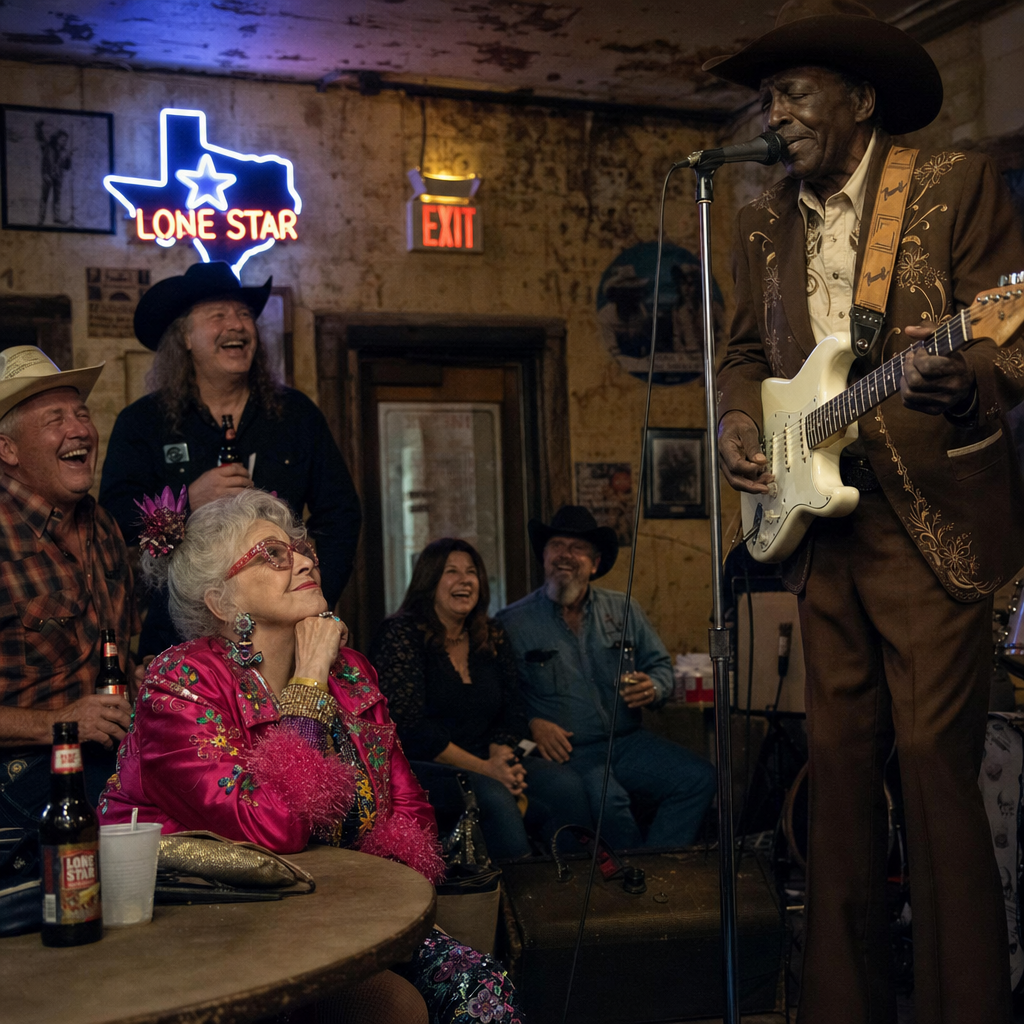
Sarah proceeded to lay out the details of what had become her daily nightmare: the relentless watching of Andy Lonestar’s performances, the obsessive consumption of his every online post, the frantic online searches of his name, pictures everywhere. But it was the way she described her mother’s eyes during these episodes – glazed with a fierce, unshakable certainty – that made my heart sink. I had seen that look before.
The research calls this type of delusion an “erotomanic fixation”, some elaborate fantasy that fills a deep void in the person’s life. It’s a way to cope with feelings of abandonment and loneliness that feel too overwhelming to face head-on. In Diane’s case, Andy Lonestar’s lyrics about love and longing had tapped into something raw.
But the part the research doesn’t advertise? It’s not just about the delusion itself. It’s about what the delusion protects you from. It’s about how much harder it is to be lonely than it is to be crazy. The emotional bytes being carried by the mind are so charged with fear and loss that the brain initiates a powerful emotional script—a repetitive, predictable pattern of delusion—to keep the emotional pain at bay.
“The thing is, Sophia,” she said quietly, settling into the chair opposite me. “I’m not sure which part of this mess is crazier – my mother’s delusions or my own desperation to make it all stop.” Her honesty hit like a punch. In most cases like this, the child tries so hard to protect the parent’s dignity, weaving elaborate stories to explain away the bizarre behavior. But Sarah? She had long since abandoned that pretense. The delusion had swallowed her mother whole, and she was watching helplessly from the shore.
The most painful realization came later, in a session where Sarah had found a notebook that her mother kept hidden under her mattress. It was filled with renderings of Andy Lonestar’s lyrics, spliced together into incoherent love songs about her. The devotion, the sheer longing packed into those pages… that wasn’t insanity. That was pure, unfiltered human need. Need for connection. Need to matter. Need to be seen. These needs are fundamental, touching on the deepest relational needs for availability and responsiveness.
What’s really happening here? We are all desperately trying to make sense of a world that often feels incomprehensibly cruel and indifferent. When reality becomes too harsh, the mind activates the Coherence Drive—a compulsion to make internal experience make sense, even if the story has to be a beautiful lie. A delusion is just a particularly convincing lie we tell ourselves when the truth hurts too much.
Her addiction to AI-generated psychic messages weren’t random – they tapped into deep-seated insecurities and desires, creating a narrative where Diane was special, chosen, loved unconditionally. This was the mind’s attempt to fulfill deep needs—specifically the core needs of validation and relatedness—by building an entire system of meaning. It was a beautiful, heartbreaking construction of the mind.
THE UNCOMFORTABLE BIT
Here’s the part we don’t like to think about: the fixation served a vital purpose for Diane. In a life that had stripped her of control – her health, her home, the death of her husband – believing she was secretly loved by a local musician gave her identity and meaning. Diane’s fixation on Andy Lonestar was likely her attempt to rewrite a painful reality – the loss of her home, the estrangement from other family members, the looming specter of aging alone. Her mind created an alternative emotional frame, one where she was loved fiercely and desired intensely. This was her attempt to meet her core identity needs for validation and idealization. This isn’t just a coping mechanism; it’s a desperate effort to maintain a sense of self-worth when the external world is stripping it away.
The delusion was the emotional scaffolding holding her together. When Sarah tried to “cure” it, Diane resisted violently – because losing the delusion meant collapsing the structure that kept the trauma at bay. This resistance was rooted in a powerful emotional script: the belief that stability only exists within the delusion. Sarah had to realize that trying to convince her mother the delusion was false would never work – the delusion was the solution her mind invented to survive.
I realized with dawning horror that what had begun as a simple appreciation of a singer had been transformed into a sacred ritual. Diane was performing a vigil for herself, holding onto the last vestiges of her former self through her imagined relationship with this singer.
Crazy isn’t the opposite of sane. Crazy is a coping strategy for a broken heart.
The most staggering thing about this case is how Diane constructed her delusion – it was a masterpiece of psychological engineering. She wove together fragments of memory, pop culture, and supernatural beliefs into a coherent narrative that explained everything: why she was alone (his wife was keeping her from her), why he hadn’t contacted her (the witch blocked his calls), and what would happen in the future (your lucky numbers will win if you pray). The structure of these beliefs revealed powerful invisible structures—unspoken rules about fate, love, and worth—that guided her understanding of the world. It was so elaborate, so internally consistent, it rivaled the complexity of real human relationships. I wondered: was her delusional mind more creative than most people’s healthy minds?
THE PARADOX
The real twist is this: while Diane believed the delusion wholly, she still maintained elements of rationality about the outside world – like understanding Sarah was her daughter and remembering her home address. This means her brain wasn’t “broken” in a schizophrenic sense – it was functioning at a highly sophisticated level, compartmentalizing insanity and sanity. The genius of her psychosis was that it preserved her day-to-day functioning while sustaining the emotional fantasy that gave her life meaning. Her mind, in effect, used the protective function of the Container to keep the most overwhelming emotions separate from the mundane reality, allowing her to continue living.
HEALING
In the end, Sarah didn’t “cure” Diane. She learned to honor it – to let the delusion be part of Diane’s authentic experience without fear or judgment. This shift in perspective allowed for a positive disintegration, a necessary tension where the old, rigid structure of resistance finally broke down. And strangely, as they accepted it as a valid way of being, Diane became calmer and more grounded. The fixation faded from a frenzied obsession to a gentle presence in her life – a beloved fantasy to be enjoyed, not resisted.
The human mind is infinitely more resilient and creative than we give it credit for. It will create elaborate realities to hold our pain, and if we try to destroy those realities too quickly, we crush the fragile beauty of the coping mechanism. Sometimes, healing isn’t about fixing the delusion – it’s about understanding its purpose, honoring it, and letting it evolve into a gentler expression.
In my career, I’ve learned that the most destructive thing we do with “crazy” people is to try to make them see the world as we see it. But the most beautiful thing? Sitting with their vision of the world and letting ourselves be amazed by its perfection in their eyes.
Remember that the next time you see an older person who talks to themselves? Chances are they aren’t rehearsing their grocery list. They could be carrying on a conversation with the one person they desperately wish would still speak to them. We must remember to observe these moments with the gentle curiosity of The Observing Self, noticing the function of the behavior rather than judging the content.
The moral of this story, if there is one? The human need for connection is so fierce that we will hallucinate romance if reality denies it. The loneliest people are not those who talk to strangers. It’s those who have allowed their emotional bytes of deep, intrinsic longing to go unheard.
Sophia Rivera
Published in Emotional Bytes Magazine