
When Spiritual Language Becomes a Tool for Control 🙏
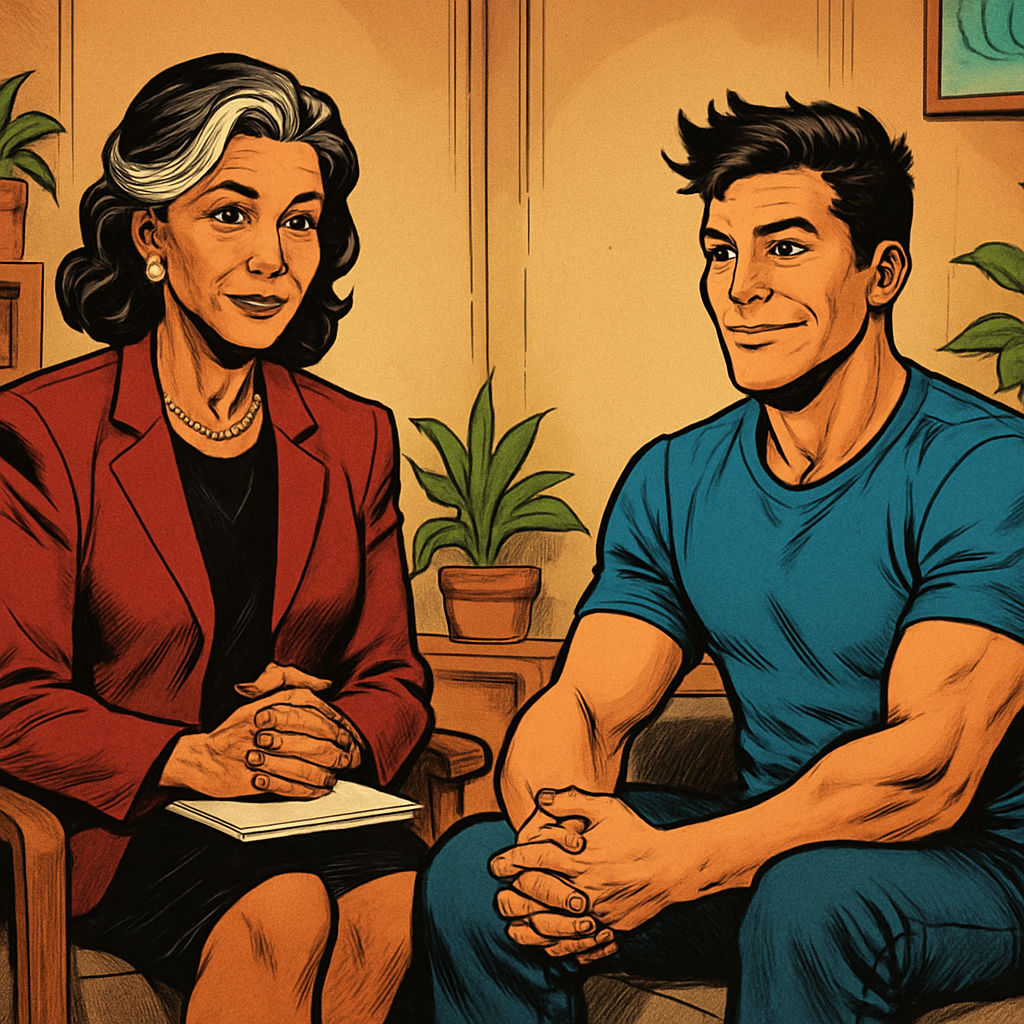
Tobias walked into my office carrying the kind of tension that makes your shoulders live somewhere near your ears. Within ten minutes, he’d explained his situation: his sister was making sexual advances while claiming God had told her they shared a “special spiritual bond.” She’d weaponized their childhood closeness and apparently the Almighty himself to bulldoze every boundary he tried to set.
“So,” I said, “she’s essentially combined emotional incest with prosperity gospel techniques.” He looked relieved that I wasn’t clutching my pearls.
Sibling Relationships: Your First Chaotic Laboratory 🧪
Sibling relationships are your first laboratory for learning how to navigate closeness, power dynamics, and conflict. Research shows these bonds uniquely shape everything from how you handle stress to how you pick romantic partners later. But sometimes the experiments go badly wrong.
Tobias’s situation revealed what happens when sibling dynamics curdle into toxicity. His sister had learned early that their biological connection gave her leverage, and she’d spent decades refining her technique. Every interaction triggered a cascade: physical tension in his chest, guilt mixed with revulsion, the need for family loyalty colliding with autonomy, and the narrative that “real family doesn’t refuse each other.”
Her encoding was relentless: “Closeness means compliance. Resistance means you don’t love me. God agrees with me, by the way.”
When Your Inner Voice Becomes Someone Else’s Propaganda 🗣️
What fascinated me about Tobias’s case was how thoroughly his inner voice—that architect of meaning that interprets our emotional experiences—had been colonized by his sister’s narratives. When he tried to set boundaries, he didn’t hear his own values. He heard her voice asking, “What would Mom think?” or “Doesn’t the Bible say to honor your family?”
His sister operated through rigid emotional scripts: make sexual comment, follow with religious justification, add guilt if he resists, finish with family loyalty appeal. These scripts felt natural to her and inevitable to him—self-fulfilling prophecies where his discomfort somehow proved he was the problem.
“She’s learned that throwing God and family at you works,” I told him. “It’s not sophisticated. It’s just effective.”
The Warmth Gap: High Conflict + Low Affection = Crisis ⚠️
Research on sibling relationships consistently shows something crucial: high conflict plus low warmth equals psychological disaster. Depression, anxiety, aggression—the full spectrum of dysfunction. Tobias described textbook low-warmth territory. His sister performed affection while extracting compliance, which is about as warm as a loan shark’s holiday card.
What helped Tobias was developing emotional granularity—breaking down that overwhelming feeling of “I feel terrible around her” into specific signals:
- Guilty (that’s her script talking)
- Violated (that’s my boundary screaming)
- Confused (that’s the religious gaslighting)
- Exhausted (that’s the cost of constant vigilance)
Suddenly, his emotions weren’t one undifferentiated mass of family obligation. They were specific signals pointing to specific problems.
The Collision of Unmet Needs 💔
His psychological needs for autonomy were being steamrolled. His emotional needs for safety were ignored. His identity needs—understanding himself as someone with rights to his own body and beliefs—were under assault. His relational needs for genuine connection were being met with transactional manipulation.
“Does she actually believe this religious stuff?” Tobias asked once.
“Does it matter?” I replied. “The function is the same. She’s found a delivery system for control that you can’t easily argue with. Arguing with God is harder than arguing with Susan.”
He laughed for the first time in weeks.
The Turning Point: Breaking Old Patterns 🔄
What actually helped was Tobias stopping his attempts to make his sister understand and instead focusing on intentional experiences. He practiced saying no in low-stakes situations. He noticed his body’s responses when she tested boundaries. He sat with the guilt without immediately capitulating to it.
We worked on integration versus elimination—not trying to obliterate his love for his sister, but creating room for those feelings alongside his equally valid need for autonomy and bodily integrity. Both could be true. He could love her from a distance. He could honor their shared past without sacrificing his present.
“So I don’t have to fix her?” he asked.
“You couldn’t if you tried,” I said. “Her emotional system isn’t yours to reprogram. But you can stop letting hers reprogram you.”
The Invisible Structures Supporting Dysfunction 🏗️
What made this situation particularly insidious were the invisible structures supporting his sister’s behavior—unspoken social rules about family loyalty, cultural expectations that siblings stay close regardless, religious communities that prioritize forgiveness over accountability.
When Tobias tried to explain his situation to relatives, they responded with, “But she’s your sister,” “Maybe she’s just lonely,” or “Have you prayed about this?” The invisible architecture of “family first, boundaries second” made his resistance look like deviance rather than her exploitation.
He eventually established firm boundaries: no visits alone, no phone calls after 8 PM, immediate end to conversations when she made sexual comments. She responded with escalation, then martyrdom, then recruiting family members to pressure him.
“How do you deal with everyone thinking I’m the bad guy?” he asked.
“You accept that some people will choose comfortable lies over uncomfortable truths,” I said. “Their emotional patterns don’t have room for what you’re describing. That’s their limitation, not your failure.”
The Long Game: Sad But Solid 💪
Last I heard from Tobias, he’d maintained his boundaries for over a year. His sister had largely given up the sexual advances but occasionally lobbed religious guilt bombs his way. He reported feeling “sad but solid”—grief over the sister relationship he’d never actually had, combined with relief at no longer performing in her dysfunction theater.
The work we did wasn’t about fixing his sister or achieving some heartwarming family reconciliation. It was about helping him decode the emotional patterns she’d been installing since childhood, recognize the scripts running his responses, and build new patterns that honored his actual needs rather than her manufactured ones.
Once you see the invisible structures holding dysfunction in place, you can’t unsee them. And that clarity, uncomfortable as it is, becomes the foundation for something better.
“You can’t set boundaries with people who experience your boundaries as betrayal, but you can stop participating in their version of the story.”
— Sophia Rivera
- The Third Rail of Family Systems: Sibling Relationships, Mental and …
- [PDF] The Impacts of Siblings on Development Across the Lifespan
- Sibling Relationships and Influences in Childhood and Adolescence
- [PDF] The Association Between Sibling Relationships and Personality
- Sibling Relations and Their Impact on Children’s Development
- [PDF] “Sibling Relationships and Development” in
- Improving sibling relationships – American Psychological Association
- Understanding the Impact of Birth Order and Sibling Relationships …