
The Paralysis of Proximity 🔒
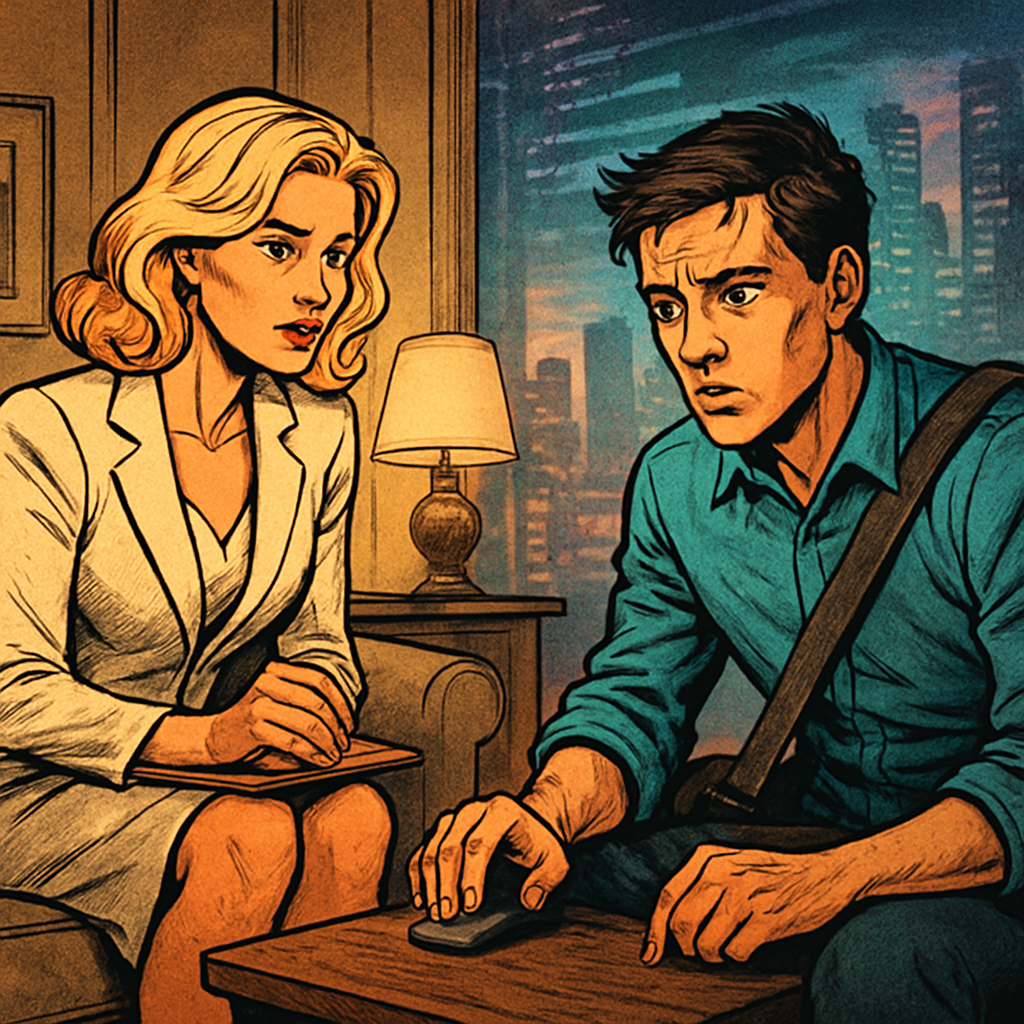
He sits across from me on a Tuesday evening in late October, laptop bag still slung across his chest like he might need to flee at any moment. Lyndon tells me he’s been staring at the same DevOps course for six weeks without clicking “enroll.” Not because he doesn’t want it, but because the moment his cursor hovers over the button, his chest tightens and his mind floods with competing voices.
Lyndon is thirty-four—smart enough to build things, ambitious enough to want more, and somehow paralyzed enough to do nothing. He’s the kind of successful person you know: someone who executes flawlessly at work but can’t execute a single decision about his own future. The kind who confuses hesitation with wisdom.
What struck me wasn’t his indecision, but its specificity. He wasn’t staring at a blank slate. He had skills, trajectories, and possibilities. He was drowning in the shallows—unable to move forward in water he could theoretically stand up in. And isn’t that worse? The paralysis of proximity, where everything feels possible and therefore nothing feels inevitable.
When Your Future Self Ghosts You 👻
Here’s what nobody wants to admit: when you’re caught in career anxiety, you’re not actually struggling with information. You’re struggling with something far more slippery—your ability to imagine yourself in that future. Not daydreaming about corner offices or remote work from Tulum, but imagining it with the embodied certainty that makes a decision feel inevitable rather than terrifying.
Lyndon kept talking about “not knowing if DevOps is right,” but what he was really describing was a broken connection between his present self and his future self. The stress had created an emotional white-out. He couldn’t feel his way forward because the emotional pathway was too loud, too panicky, too cluttered with doubt.
When I asked him to describe himself six months into the DevOps certification, learning the material and passing modules, he went quiet.
“I don’t know,” he finally said. “I just see… failure.”
Not failure at the course. Failure at choosing wrong. Failure to be someone who makes confident decisions. That’s the emotional weight he was carrying—a cluster of anxiety, physical tension, and self-doubt calcified into a story: If I can’t be certain, I shouldn’t move.
The irony is that certainty is a luxury that doesn’t exist in career decisions. It’s a myth sold by people who’ve already made their choices and work backward to justify them as inevitable.
The Perfectionism Tax 💸
What Lyndon called “being careful” was perfectionism wearing a pragmatic disguise. He needed to be sure DevOps was right before committing. He needed to know he wouldn’t struggle. He needed to believe he’d breeze through, not actually work at it. Which is just another way of saying he needed to not be human.
This is where imposter syndrome and perfectionism become the same toxic dance—both rooted in the brittle certainty that other people know what they’re doing and you’re the fraud. Other people make confident decisions. Other people don’t second-guess themselves at 2 a.m. Other people just… know.
When I asked Lyndon about his last good decision, he walked me through his professional wins. Each one, he realized, had been made without perfect information. He’d learned Python without being sure it was right. He’d taken a contract role without knowing if it would lead anywhere. Every skill he had was built on choosing without certainty.
“So why is this different?” I asked.
His jaw tightened. Because this was personal. Because his career skills felt distinct from his ability to make life decisions. Because somewhere along the way, he’d created a division between the competent professional he was at work and the anxious person he became when facing his own choices.
The Fear Loop (And Why Avoidance Makes Perfect Sense) 🔄
Here’s what I’ve learned after sitting with hundreds of people caught in this particular hell: avoidance isn’t laziness. It’s a sophisticated emotional survival strategy. Every time Lyndon thought about enrolling and felt that spike of anxiety, his nervous system learned something: Don’t go there. That direction hurts. So it helpfully generated legitimate-sounding concerns. Maybe I should wait until next quarter. Maybe I should research more programs first.
The problem is that avoidance works. Spectacularly. The anxiety disappears the moment you defer the decision, and your nervous system gets rewarded for not moving. You’ve trained yourself to believe staying still is safer than moving forward.
What breaks this loop isn’t more information or certainty. It’s something smaller and weirder: taking one low-stakes action that proves to your nervous system that moving forward doesn’t actually kill you.
I suggested Lyndon do something absurdly simple: not enroll in the course. Instead, just attend one free webinar from the course provider. One hour. No commitment. No tuition.
He looked almost offended. “That seems pointless,” he said.
Exactly. It was pointless in terms of credentials. But it was everything in terms of breaking the avoidance loop. Once he did it and didn’t die, once he sat through an hour of DevOps content and realized he actually understood about seventy percent, something shifted. Not a magical epiphany, but a small crack in the certainty that moving forward would be a disaster.
The Self-Efficacy Question 🎯
The real architecture of Lyndon’s paralysis wasn’t about DevOps at all. It was about his relationship with his own decision-making. He didn’t trust himself—not because he lacked intelligence or capability, but because he’d spent so long hedging bets and postponing choices that deciding itself felt like reckless confidence he wasn’t allowed to have.
When I asked what he’d need to make this decision, he said something revealing: “I’d need to know it was the right choice.” But underneath, he really meant: I’d need to know I’m the kind of person who makes right choices.
That’s the hidden need underneath career indecision, especially for high-achievers. It’s not about the decision itself—it’s about proving to yourself that you’re competent enough, worthy enough to make a choice that sticks. To be the author of your own life.
Here’s what shifted for Lyndon: the moment he stopped asking, “Is DevOps the right choice?” and started asking, “What would someone who trusts their own judgment do right now?”—his voice changed. He’d reframed the decision from a test of his worthiness to a practice in self-trust. And that’s a question you can actually answer.
The Pattern to Notice 🔍
- Do you find yourself researching endlessly before making any significant choice?
- When you think about committing to something, does your mind immediately flood with reasons to wait?
- Do you describe yourself as “careful” or “thoughtful” when deciding, but internally feel stuck?
- Is there a gap between how you operate at work (decisive, capable) and how you operate in your personal life (hesitant, doubtful)?
- When faced with uncertainty, do you interpret it as a sign you’re not ready rather than a sign you’re ready to risk?
- How much time passes between wanting something and feeling permitted to pursue it?
The Quiet Proof ✨
Three months later, Lyndon was halfway through the DevOps course. Not because it was perfect, not because he suddenly became certain. But because he’d started building a different relationship with his own judgment. He’d taken that small action—the webinar—and it created a new emotional byte in his system. Not euphoria or complete confidence, just a quiet sense of: I did that, and nothing bad happened.
That’s how change actually works. Not through dramatic revelation, but through the accumulation of small proofs that you’re not as fragile or foolish as your anxiety insists.
The real lesson wasn’t about DevOps. It was recognizing that the person making the decision and the person doubting it were both him. And that paradox—holding both the doubt and the capability at the same time—was exactly where his actual power lived.
— Lola Adams, noting that we often mistake the paralysis of self-doubt for the prudence of wisdom, when really it’s just fear that learned to sound reasonable.
- Do I decide my career? Linking career stress, career exploration …
- EJ1198777 – Career Indecision and Career Anxiety in High … – ERIC
- The mediating role of career decision-making self-efficacy in the …
- SELF EFFICACY, CAREER INDECISION AND ANXIETY AMONG …
- [PDF] Fear and Career Decision-Making Difficulties: Guiding Individuals …
- Prevalence of Career Indecision and Factors Influencing It Among …