
The Ghost of Betrayals Past 👻
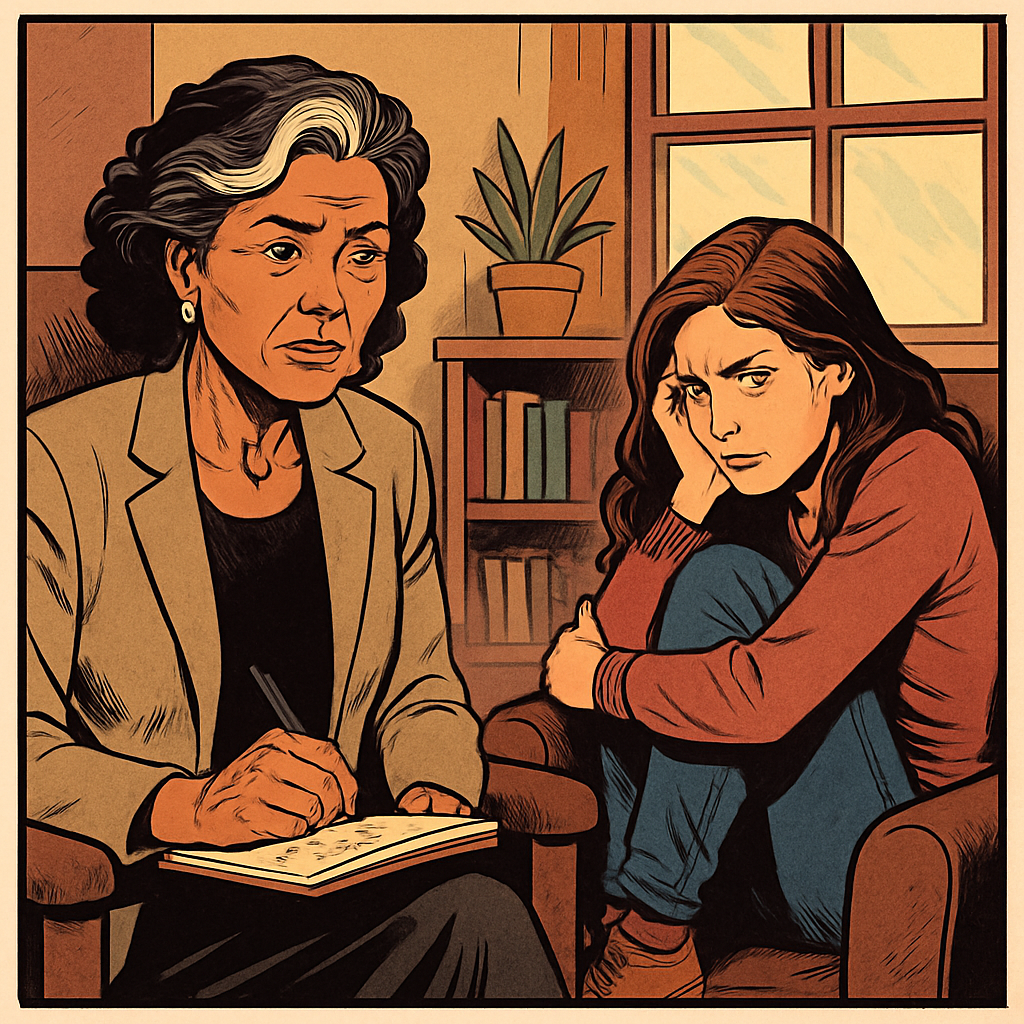
Last Tuesday, I watched Brooke fold herself into the armchair across from me like origami—each movement deliberate, as if she might shatter if she moved too quickly. She’d spent the weekend discovering her boyfriend had been paying cam girls again after promising to stop. And yet, in that uniquely human way we torture ourselves, she was more worried about ruining their “relationship progress” by bringing it up than about the fact he’d been lying to her face while she worked on forgiving him.
It’s remarkable how often we convince ourselves that protecting a relationship means swallowing our own truth—as if relationships thrive on convenient fictions rather than inconvenient honesty.
Brooke, just twenty and already wrestling with complexities that people twice her age struggle to navigate, found herself caught in the classic betrayal loop. She’d discovered her boyfriend’s infidelity with cam girls in March, confronted him, accepted his promises, and worked hard to rebuild trust. Now, barely two months later, fresh evidence showed he’d never actually stopped—just gotten better at hiding it.
“We’ve been doing so much better lately,” she said, her fingers nervously twisting the friendship bracelet on her wrist. “If I bring this up now, I’ll ruin everything.”
“What are you actually afraid will happen if you confront him?” I asked.
“That I’ll lose him.” Her voice cracked slightly. “Or that I’ll confirm what I already suspect—that I’m not enough.”
Understanding the Betrayal Byte 🧠
What Brooke was experiencing wasn’t just garden-variety trust issues. She was processing what I call a “betrayal byte”—a complex emotional unit containing the physical sensations of anxiety, the emotional charge of hurt, the need for security, and the narrative that she wasn’t worthy of honesty. Each time she discovered new evidence, this byte reactivated and grew stronger.
Research shows that repeated betrayals create trauma responses similar to PTSD. Your brain starts running hypervigilance scripts—scanning for threats, questioning motives, doubting what you see. The cruel irony is that these protective mechanisms often make you feel crazy when you’re actually responding rationally to genuine threats. 🔍
“Everyone keeps saying relationships take work,” Brooke continued, “so maybe this is just the work part?”
“There’s a difference between work and exploitation,” I replied. “Work is mutual effort toward growth. What you’re describing is you doing emotional labor while he outsources his sexual interests and lies about it.”
The Real Question Isn’t About Him 🤔
In our third session, after unpacking the patterns more deeply, I asked Brooke a question that shifted her perspective: “If your best friend told you her boyfriend repeatedly lied about the exact same issue after promising to change, what would you tell her?”
“I’d tell her she deserves better,” she said immediately. “That she shouldn’t have to police someone into treating her with respect.”
“So why are you on relationship probation duty instead of living your life?”
That question activated her needs navigator—the emotional processing system that helps identify what we truly require for wellbeing. Suddenly Brooke could see how her relational needs for honesty and respect had been subordinated to her identity needs for validation and belonging. The script she was following—“if I’m understanding enough, he’ll change”—was revealed as the exhausting hamster wheel it truly was.
Studies have found that people who stay in relationships with unrepentant betrayers aren’t actually more forgiving—they’re more willing to compromise their boundaries. And once those boundaries become fluid, they tend to dissolve entirely. ⚖️
Breaking the Binary 💪
The breakthrough came when Brooke realized she wasn’t facing a binary choice between “confront and destroy” or “silence and survive.” By developing greater emotional granularity—breaking down her overwhelming feelings into more specific components—she could see more options.
“I’m not just hurt,” she said in our sixth session. “I’m furious about the deception, disappointed by the broken promise, and embarrassed that I’m back where I started. But I’m also proud that I know what I want now.”
This granularity transformed her approach. Rather than viewing confrontation as relationship destruction, she could now frame it as information gathering. Was he capable of honestly addressing his behavior? Could he recognize the pattern without defensiveness? Would he take concrete steps toward change or just offer more empty promises?
The answers to these questions wouldn’t just determine the relationship’s fate—they would reveal whether real intimacy was even possible between them. 💫
The Power of Truth ✨
In our final session before she had the conversation with him, Brooke said something that showed how far she’d come: “I realized that being alone isn’t the worst outcome here. The worst outcome is spending my twenties becoming an expert in managing someone else’s deception.”
The truth may cost you a relationship, but silence costs you yourself.
Until next time, may your boundaries be stronger than your partner’s excuses. 🛡️
Sophia Rivera
- Infidelity in the Adolescence Stage: The Roles of Negative Affect …
- Hidden Wounds of Infidelity: Children and The Trauma of Affairs
- Why Do People Cheat | Therapy Long Island
- From Pain to Betrayal: Childhood Trauma and Infidelity
- Love and Infidelity: Causes and Consequences – PMC
- How Does Infidelity Impact Young, Teenage & Adult Children?
- Long-Term Psychological Effects of Infidelity: What the Research Says
- Why Do Young People Cheat and Have Affairs? – Psychology Today