
🥞 When Every Path Looks Like a Cliff Edge
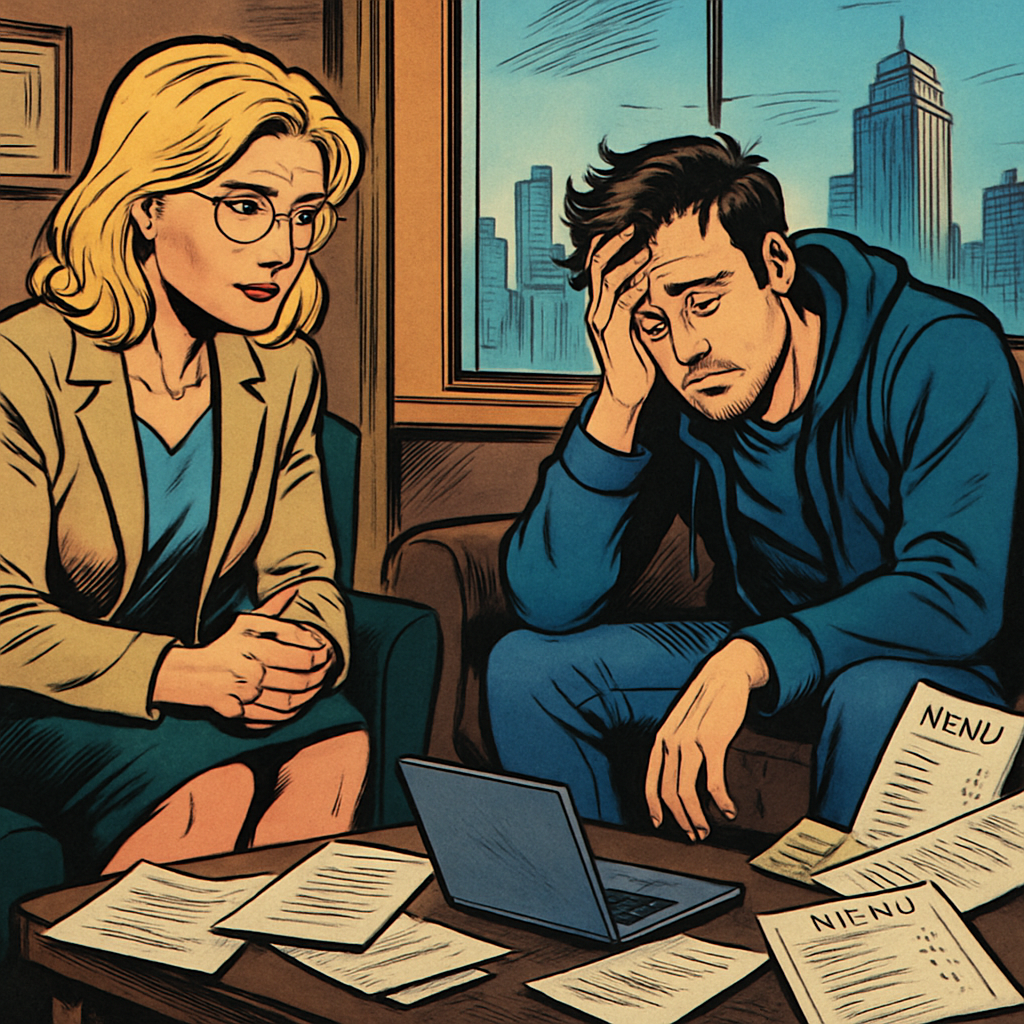
There he was, staring at the menu like it contained nuclear launch codes instead of brunch options. Gavin, 37, successful hedge fund analyst by day, frozen statue of indecision by… well, all the time. I watched him flip back and forth between pages, occasionally looking up with that helpless expression I’ve seen on Manhattan’s finest when confronted with life’s most pressing question: “Belgian waffle or avocado toast?”
“I usually get the eggs Benedict,” he finally confessed, “but what if something else is better? What if I make the wrong choice?”
I nearly snorted my coffee. 🤦♀️
Thirty seconds later, we were discussing his apartment hunt – three months and counting with no decision. Two weeks after that, he was sitting in my office, having finally made one good decision that day.
🧠 The Paralysis Trap
“I can’t pull the trigger on anything,” Gavin explained during our third session. “Job offers, dating apps, even which show to watch on Netflix. I research everything to death, make pro-con lists, then… nothing.”
What Gavin described wasn’t garden-variety indecisiveness. His brain had become a labyrinth of branching possibilities, each one leading to an imagined catastrophe. Each choice represented not just an option but an entire identity and future he was selecting – or rejecting. That’s a hell of a lot to put on a Hinge profile. 📱
The thing about overthinking is that it masquerades as thoroughness. We convince ourselves that if we just analyze one more variable, research one more angle, we’ll reach decision nirvana – that magical state where the right choice becomes blindingly obvious and regret-proof.
But here’s what we all know but pretend not to: That moment never comes.
😴 The Exhaustion of Endless Possibilities
“Do you know I spent three hours last night comparing refrigerators?” Gavin slumped in his chair. “I’ve been doing this for weeks. I still don’t have a refrigerator.”
Ever wonder why successful, intelligent people fall apart over seemingly simple decisions? It’s not weakness – it’s math. Every decision requires mental energy. Make enough of them consecutively, and you’ll find yourself standing in the supermarket aisle at 8 PM, staring blankly at pasta sauce options, suddenly wanting to curl into fetal position because you can’t determine if you want chunky or smooth. 🍝
We’re exhausting ourselves with choices that didn’t exist a generation ago. Our grandparents had three TV channels and married someone from their neighborhood. We have infinite streaming options and can swipe through potential partners across eight zip codes before breakfast.
When I pointed this out, Gavin looked relieved. His paralysis wasn’t personal failure – it was a predictable response to modern choice overload colliding with his perfectionist tendencies.
“But how do I know I’m making the right decision?” he asked.
“You don’t,” I replied. “And that’s the secret everyone’s keeping from you.”
🎯 The Myth of Perfect Choices
Humans are terrible forecasters of our own happiness. We consistently misjudge what will satisfy us and overestimate the emotional impact of both positive and negative outcomes. We’re guessing – all of us, all the time.
For Gavin, this was revelatory. His emotional script had convinced him that with enough analysis, he could achieve decision perfection. This script wasn’t serving him – it was imprisoning him in endless loops of research and doubt.
Are you caught in the same trap? 🤔
Ask yourself:
- Do you regularly abandon shopping carts (virtual or real) because you need to “think about it more”? 🛒
- Have you missed opportunities because you couldn’t commit before the window closed?
- Do you find yourself researching minor purchases for hours?
- Has someone ever said to you, “It’s not that serious of a decision”?
- Do you feel genuine relief when someone else makes a choice for you? 😌
- After finally deciding, do you immediately question if it was right?
I watched Gavin nod with increasing vigor as we went down the list. His nervous system was treating apartment hunting like encountering a predator.
🔓 Freedom Through Constraints
Over our months together, Gavin didn’t eliminate his analytical nature – he harnessed it. We worked on developing emotional granularity – transforming overwhelming emotional “bubbles” into manageable “fizz” by making finer distinctions between his feelings.
Was it really life-altering fear, or just normal uncertainty?
Was it genuine concern about a decision, or habitual worry?
He created decision boundaries – price ranges, neighborhoods, and features for his apartment search. He set time limits for research and promised himself he wouldn’t reopen investigations once closed.
When we gradually constrained his choices, something magical happened – he found freedom. ✨
By accepting that perfect decisions don’t exist, he could finally make good ones.
🏠 The Perfect Imperfection
Six months later, Gavin was living in his new place.
“It’s not perfect,” he told me, “but it’s mine. And I’m sleeping better than I have in years.”
I couldn’t help but smile. The greatest irony of decision paralysis is that accepting imperfection is the only perfect solution.
— Lola Adams, noting that our brains evolved to decide between berries and nuts, not between forty-seven shampoos promising forty-seven versions of happiness 🧠🥜
- Analysis Paralysis: The Burden of Choice – Spiegeloog
- ADHD and Decision Paralysis: Why Small Choices Can Feel …
- Decision Fatigue: A Conceptual Analysis – PMC
- Decision Paralysis: How To Stop Overthinking Your Choices
- Choice Overload Bias – The Decision Lab
- Too Many Choices: How Decision Paralysis is Crippling Your …
- The ‘paralyzing paradox’ of too many choices
- Choose Quickly or Naught: Paralyzed by a Plethora of Options