
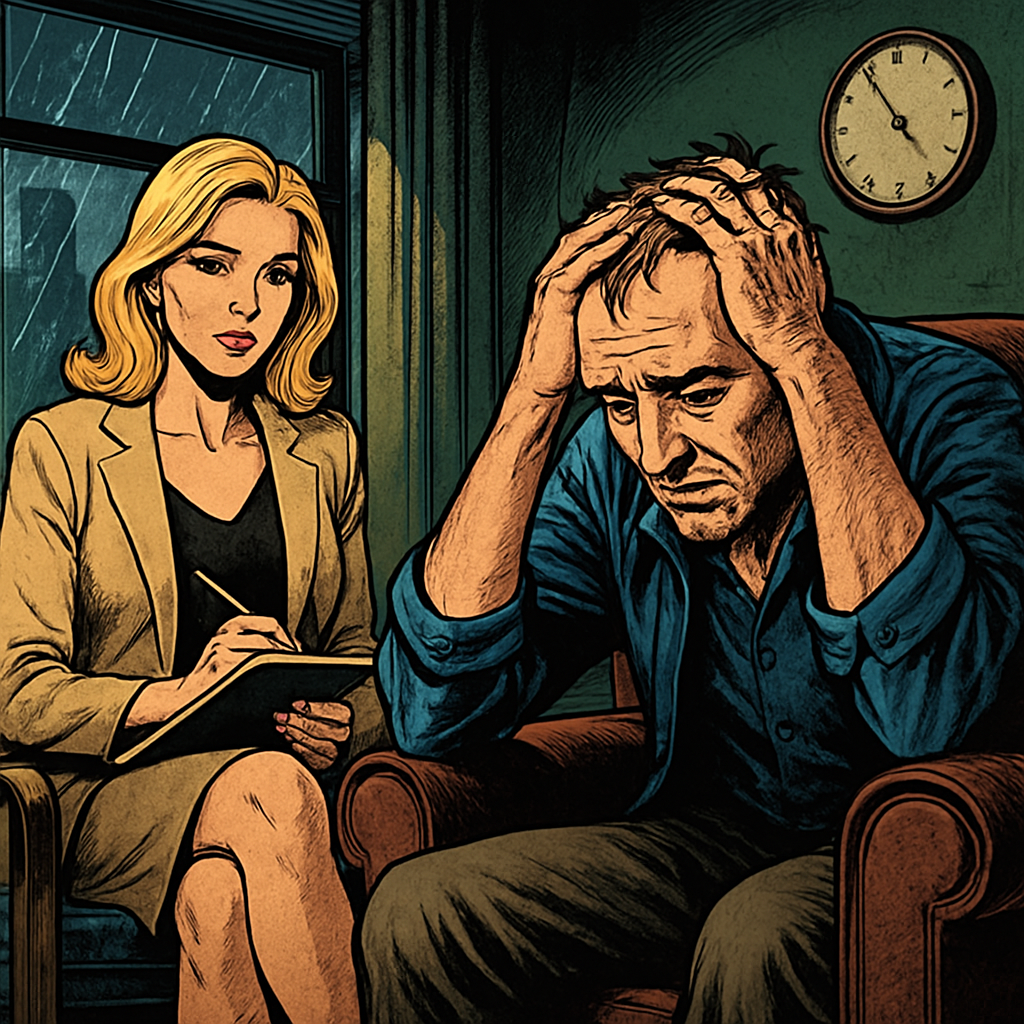
The Comfort Cage We Build for Ourselves 🏠
Let’s be honest about something we all know but rarely admit: we humans are absolutely fantastic at turning our comfort zones into prisons, then decorating them so nicely we forget we’re inmates. Lucas had furnished his with a predictable job, weekend visits to his parents where his mother still did his laundry, and vacations to the same beach town every summer because “it’s reliable.”
His emotional patterns around uncertainty were so charged with anxiety that he’d constructed an entire life designed to avoid it. Every time he contemplated change—a job interview, a trip requiring air travel, even a different coffee shop—his body would flood with warning signals. The physical discomfort, paired with stories about danger and inadequacy, created a powerful avoidance script that ran automatically.
“I’m just being practical,” he’d say, defending his refusal to drive more than an hour from home. But practicality was just the respectable disguise his fear wore to parties.
The thing about these comfort cages is that they’re actually quite uncomfortable if you look closely. Lucas wasn’t thriving—he was surviving. The difference? About as vast as the distance between existing and living.
The Midlife Void No One Warns You About ⚠️
Around 40, something happens that we should probably put on calendars with those little pop-up reminders: “Warning: The scaffolding of your early adult life may suddenly feel meaningless. Plan accordingly.” For Lucas, this manifested as a profound emptiness that no amount of sports watching or weekend beers could fill.
What’s fascinating about midlife stagnation is how it sneaks up on even the smartest people. One minute you’re 28 with “potential,” the next you’re 45 wondering when you became so… fixed. When did your personality harden from clay into concrete?
Ask yourself:
- When was the last time you did something that scared you? 😰
- How many of your weekly routines are chosen versus inherited?
- If your life were a novel, would the middle chapters have any plot development, or just scene description? 📖
- What emotions arise when you contemplate significant change?
Lucas couldn’t answer any of these without that deer-in-headlights look. His emotional scripts around ambition had atrophied from disuse, replaced by the comforting rhythm of routine.
The Parent-Shaped Hole in Adult Development 👨👩👦
“My parents are proud of me,” Lucas would say, as if this were the ultimate achievement metric for a man in his fifth decade. And therein lay one of the most insidious emotional patterns governing his life—success defined as parental approval.
When we’re perpetually orbiting around our parents’ gravity, we never develop our own gravitational pull. Lucas’s weekend pilgrimages to his childhood home weren’t just about free laundry service—they were emotional refueling stations where his identity as “good son” temporarily filled the void left by his undeveloped adult identity.
His psychological need for autonomy conflicted with his emotional need for safety, while his identity needs remained tethered to external validation rather than self-definition. The result? A grown man with the emotional development of someone much younger, still seeking permission for his own existence.
Breaking the Patterns That Break Us 🔗
What finally shifted for Lucas wasn’t a dramatic epiphany but the slow, unglamorous work of emotional awareness—learning to break down overwhelming feelings of fear and inadequacy into smaller, more manageable components.
We started with tiny intentional experiences that created new emotional patterns. A different coffee shop. A weekend trip just slightly beyond his comfort radius. Conversations with his parents that didn’t follow the usual scripts.
The hardest part wasn’t the doing—it was facing the deeper emotional landscape: his feelings about his feelings. The shame about his fear. The anger about his stagnation. The grief for the decades of growth he’d missed.
“I feel like I’ve been sleepwalking,” he told me in our final session. “And now I’m awake, but I’ve ended up somewhere I never intended to go.”
That awareness—painful as it was—contained the seed of his transformation. ✨
The Path Forward 🛤️
Lucas didn’t suddenly become a mountain-climbing entrepreneur with a passport full of stamps. Change rarely works that way. But he did start interviewing for positions that scared him a little. He took a solo trip that required a flight. And he started having Sunday dinners at his own apartment, inviting his parents into his world rather than always retreating to theirs.
The real victory wasn’t in the external changes but in his developing capacity to recognize his own emotional patterns—to see the invisible architecture that had been shaping his choices all along.
Additional Resources:
Research on Adult Development and Change
Understanding Psychological Patterns in Midlife
Male Midlife Crisis: Causes, Coping and Meaning
Rediscovering Passion: Your Guide to Midlife Career Changes
Understanding Midlife Crisis in Men
The Psychology of Career Changes